
On this page9 sections
Most people discover their tax code is wrong the same way they discover a slow puncture: too late, and only after the damage is done. If you have not checked your tax code in the last twelve months, there is a reasonable chance you are overpaying income tax every single month without knowing it.
This is not a niche problem affecting a small group of edge-case employees. It is a structural flaw in how HMRC administers Pay As You Earn (PAYE). The department relies on information from employers, pension providers, and its own records, all of which can be out of date, incomplete, or simply wrong. When the inputs are wrong, the tax code is wrong. And when the tax code is wrong, you pay for it.
- Tax Code
- A tax code is a combination of numbers and letters issued by HMRC to your employer or pension provider. It tells them how much income tax to deduct from your pay before it reaches you. The most common code in 2024/25 is 1257L, which represents the standard Personal Allowance of £12,570.
Why Checking Your Tax Code Is Not Optional
HMRC issued approximately 84 million PAYE coding notices in the 2022/23 tax year. Even if the error rate is modest, that points to millions of employees on codes that do not reflect their actual circumstances. The tax system does not pause to ask whether your code is still accurate after a job change, a pay rise, or a new benefit-in-kind from your employer.
84m
PAYE coding notices issued by HMRC in 2022/23
£000s
potential overpayment over four years on a basic-rate taxpayer with wrong code
4 years
how far back you can reclaim overpaid tax from HMRC
The problem compounds over time. An incorrect code applied in April is wrong for every payslip that follows until someone notices and acts. For a basic-rate taxpayer, a code that under-declares the Personal Allowance by £1,000, say because HMRC has incorrectly assumed you receive a taxable benefit you no longer receive, means an extra £200 deducted across the year. Quiet. Invisible. Gone.
For higher-rate taxpayers, the numbers are worse. A £2,000 coding error at the 40 per cent band costs £800 per year. Over four years, that is £3,200 sitting in HMRC's account instead of yours. HMRC will refund it if you ask, but the department is not known for sending letters that begin: "We think we may owe you money."
The Five Most Common Reasons Your Tax Code Is Wrong
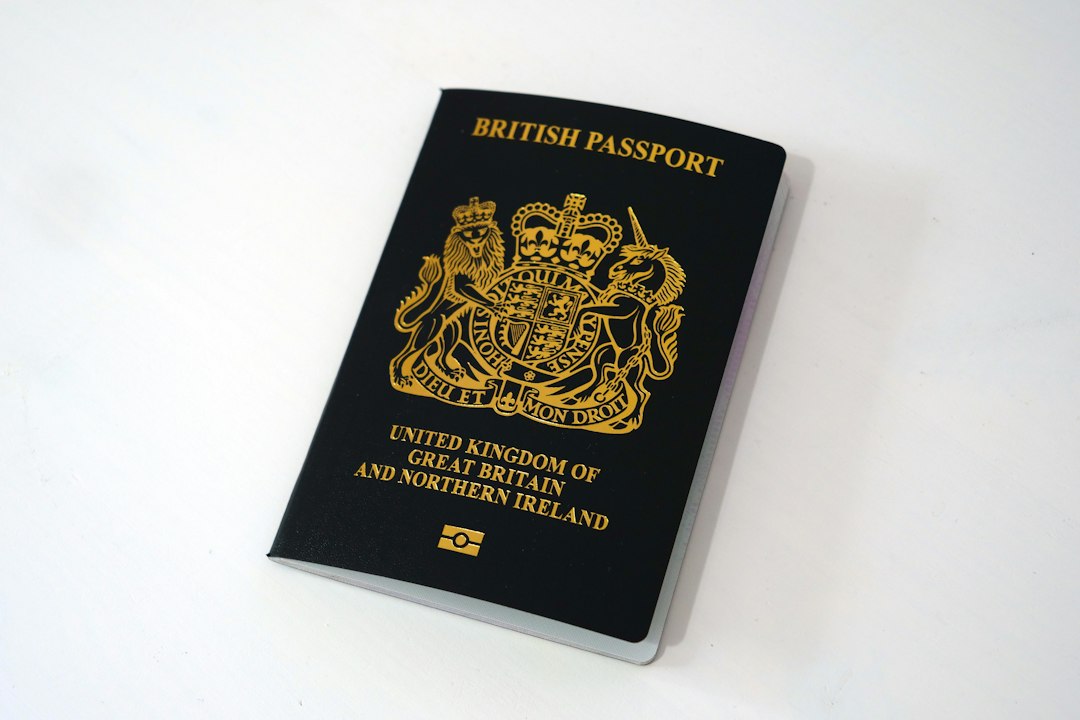
Tax codes go wrong in predictable ways. Knowing the causes helps you spot errors quickly when you check your tax code.
1. You Changed Jobs
When you move employers, your new payroll team may not receive your P45 in time, or may receive it with gaps. HMRC sometimes issues an emergency tax code (1257L on a Month 1 or Week 1 basis) that treats each pay period independently, ignoring income you received earlier in the tax year. This can mean overpaying tax significantly in the months after a job change.
2. You Have Multiple Income Sources
If you have two jobs, a part-time role alongside a main employment, or a workplace pension running alongside a salary, HMRC must split your Personal Allowance across sources. It often gets this wrong, applying the full allowance to one source and a zero-allowance code (BR or D0) to another, which is correct in theory but frequently applied to the wrong income stream. Our tax calculator for multiple incomes can show you what the split should look like.
3. Your Employer Reported a Benefit-in-Kind Incorrectly
Company cars, private medical insurance, and other taxable benefits are reported to HMRC via the P11D process each year. If your employer reports a higher value than the actual benefit, or reports a benefit you no longer receive, HMRC adjusts your code downwards to collect tax in advance. You may not notice until you wonder why your take-home pay quietly shrank.
4. You Are in Receipt of the High Income Child Benefit Charge
If your adjusted net income exceeds £60,000, the High Income Child Benefit Charge applies. HMRC sometimes adjusts your tax code to collect this charge through PAYE rather than Self Assessment. If your income has fallen below the threshold since the code was set, or if you have stopped receiving Child Benefit, you could be over-collecting. Our Child Benefit tax calculator covers the thresholds in detail.
5. Old Underpayments Are Still Being Collected
HMRC can add historical underpayments to your current tax code, spreading the collection over the following tax year. If you have settled a previous year's underpayment directly but HMRC has not updated its records, you may be paying twice. This is more common than HMRC would probably like to admit.
What Your Tax Code Is Actually Telling You
Most employees see "1257L" on their payslip and assume everything is fine. But the letter suffix carries significant meaning, and so does anything that is not 1257L. We have covered the detailed mechanics in Tax Code Numbers: What Each Digit Actually Means, but the core principle is straightforward: the number tells your employer how much tax-free income you are entitled to, and the letter tells them the rules to apply.
An "L" suffix is standard. A "K" code means HMRC believes you owe tax that cannot be collected another way, and it is deducting extra from your pay to cover it. A "BR" code means no Personal Allowance is being applied at all and every pound is taxed at 20 per cent. A "D0" code means everything is taxed at 40 per cent.
If you see BR or D0 on your main (highest-income) employment and you have not been told explicitly why, that is a red flag worth investigating immediately. You can also read Your Tax Code Is a Message from HMRC. Can You Read It? for a deeper breakdown of what each suffix means in practice.
How to Check Your Tax Code Right Now
You do not need an accountant, a tax adviser, or even a government login to take a first look at your situation. The fastest route is to check your tax code at /check-my-tax-code, which will show you whether your current code aligns with your circumstances and flag any obvious discrepancies.
For the official record, HMRC provides access through the Personal Tax Account at gov.uk, where you can see all coding notices issued, including those sent to previous employers. You will need a Government Gateway login. Once inside, look for the "PAYE" section and then "Tax codes for current year."
Also check your payslip directly. Your tax code should appear on every payslip. If it has changed without explanation, or if it differs from what HMRC shows in your Personal Tax Account, your employer's payroll system may not have received the updated notice.
For a more complete picture of where HMRC stores this information, Find My Tax Code: Five Places HMRC Hides It walks through every source.
1257L
Standard tax code for most UK employees in 2024/25
£12,570
Personal Allowance the standard code represents
20%
tax rate applied under a BR code, with zero Personal Allowance
What to Do If Your Code Is Wrong

Finding an error is half the battle. Correcting it requires one of several routes depending on how the error originated. We have mapped all four correction paths in How to Change Your Tax Code: Four Routes, One Goal, but the quickest route for most employees is to call HMRC's income tax helpline on 0300 200 3300 or use the "Check your Income Tax" service in your Personal Tax Account to update your details directly.
If the error has resulted in overpaid tax, HMRC will usually issue a refund at the end of the tax year through a P800 calculation. However, if you have overpaid for previous years and HMRC has not issued a P800, you will need to submit a formal claim. You can go back up to four tax years, which means in April 2025 you can still reclaim overpayments from the 2021/22 tax year.
Do not assume HMRC will sort it automatically. The department's track record on proactive corrections is, to put it charitably, inconsistent. If you suspect you have been overpaying, make the claim.
A Real-World Scenario: Sarah, NHS Administrator
Sarah earns £38,000 as a full-time NHS administrator. In September 2023 she joined a gym through her employer's salary sacrifice scheme, but the benefit was incorrectly logged as a taxable perk rather than a salary sacrifice arrangement. HMRC adjusted her code from 1257L to 857L, reducing her effective tax-free allowance by £4,000.
At the basic rate, that adjustment cost Sarah £800 in the year. She did not notice until she ran a check in February 2024. The correction took one phone call and a follow-up letter. HMRC issued a refund in her end-of-year P800. Nine months of unnecessary deductions, recovered because she took fifteen minutes to investigate.
Sarah's situation is ordinary. It is not dramatic, not fraudulent, and not the result of anyone acting in bad faith. It is simply what happens when a complex PAYE system processes millions of data points and occasionally gets them wrong.
If You Have Income Outside PAYE
Employees who also receive rental income, freelance fees, or investment returns above certain thresholds may have those amounts coded into their PAYE tax code for collection. This is efficient when it works, and quietly destructive when the estimate is wrong.
If HMRC has estimated your rental income at £5,000 when you actually earned £2,000, you are paying tax on an extra £3,000 that does not exist. A wrong income estimate in your code is just as costly as a wrong allowance figure, but it is easier to miss because the starting point is always an estimate. Our salary tax calculator can help you model what your liability should actually be, which gives you a baseline for challenging an incorrect coding estimate.
People also ask
How do I check my tax code is correct?
Log in to your HMRC Personal Tax Account at gov.uk and navigate to the PAYE section, or use a free tool at /check-my-tax-code. Compare the code on your payslip with what HMRC shows and check the breakdown of deductions and allowances that make up the number.
What happens if my tax code is wrong?
If your code is too low, you overpay income tax each month. If it is too high, you underpay and HMRC will collect the shortfall later, either through an amended code or a demand. Both outcomes are avoidable if you check and correct the code promptly.
Can I get a refund if I paid too much tax due to a wrong code?
Yes. HMRC typically issues a P800 tax calculation after the end of the tax year if you have overpaid. If you believe you have overpaid but have not received a P800, you can claim directly through your Personal Tax Account or by calling HMRC. Claims can go back up to four previous tax years.
Why does my employer not just use the right tax code automatically?
Your employer applies whatever code HMRC instructs them to use. If HMRC's records are incorrect, the code passed to your employer will also be incorrect. Employers have no independent way to verify whether the code reflects your actual circumstances.
The Uncomfortable Reality

The UK tax system places the burden of accuracy on the taxpayer, not on HMRC. The department issues coding notices based on the information it holds, and that information is only as accurate as what employers, pension providers, and you yourself have reported. When the information is wrong, the code is wrong, and the correction depends entirely on someone noticing and acting.
For most employees, the payslip is a monthly document they glance at and file. The tax code is a footnote. HMRC is counting on that indifference to some degree; every year that an overpayment goes unclaimed beyond the four-year window becomes revenue the department keeps permanently.
That is not a conspiracy. It is just how the system is designed, and it rewards the people who bother to check.
If you have not checked your tax code this tax year, the logical next step is obvious. Check your tax code now at /check-my-tax-code. It takes less time than reading this article, and the upside, potentially hundreds of pounds returned to your account, is considerably more satisfying.
File your MTD quarterly updates in minutes
TapTax imports your bank statements, categorises expenses automatically, and submits to HMRC with a tap. Free plan, no card required.
Start freeFrequently asked questions
How often should I check my tax code?
You should check your tax code at the start of each tax year (April) and after any major change, such as a new job, a pay rise, a change to benefits, or a second income source. Checking annually as a minimum significantly reduces the risk of a prolonged overpayment.
Can a wrong tax code result in an unexpected tax bill?
Yes. If your tax code is too generous, meaning it allocates more Personal Allowance than you are entitled to, you will underpay tax through PAYE. HMRC will reclaim this either by adjusting your code in the following year or by issuing a tax demand directly. Checking your code regularly helps you avoid a surprise bill.
Does my tax code reset at the start of each tax year?
HMRC issues new coding notices at the start of each tax year, but the new code is usually based on the previous year's information updated for any changes HMRC is aware of. It does not automatically reset to the standard code unless your circumstances have been communicated. Errors from the previous year can therefore carry forward.
What is an emergency tax code and how long does it last?
An emergency tax code (typically 1257L W1 or 1257L M1) is applied when HMRC does not have enough information to issue a full cumulative code, often after starting a new job without a P45. It treats each pay period independently and can lead to overpaying tax. HMRC should correct it once it receives the relevant information, but chasing this up yourself is faster.
Can I check my tax code without a Government Gateway account?
Yes. Tools such as the free checker at /check-my-tax-code allow you to verify whether your code looks correct based on your circumstances without needing a Government Gateway login. For the HMRC record and to make changes, you will eventually need to access your Personal Tax Account.