
Free Accounting Software UK: The Data Question HMRC Ignores
Before you hand your financial records to free accounting software, ask who owns that data. UK sole traders face a hidden cost HMRC never mentions.
What does free accounting software actually cost you when HMRC can compel a third-party platform to hand over your financial records? That question does not appear in any HMRC guidance on Making Tax Digital. It should.
Sole traders searching for free accounting software UK are, understandably, focused on the monthly subscription line in their budget. Paying £30 a month to QuickBooks or Xero for the privilege of submitting five returns a year feels like a shakedown, because it is. But the alternative, signing up to a free tool and feeding it every invoice, every expense, every client payment for the next decade, carries its own cost. It is just denominated in something other than pounds.
This post is not another rundown of which free tools are MTD-compatible. That ground has been covered. This is about the question that comes before the download: who owns the financial picture you are building inside someone else's free product, and what happens to it?
- Free accounting software monetises your data in ways that are legal but rarely disclosed in plain English.
- HMRC can issue a third-party information notice to any UK software provider, compelling disclosure of your records.
- Your data inside a free platform is an asset on their balance sheet, not a private filing cabinet.
- MTD will require continuous digital record-keeping from April 2026, making your software choice a long-term data commitment.
- Paying a modest, transparent subscription is not waste. It is, in some cases, the privacy-preserving option.
The Business Model Behind the Free Tier
No software company builds, maintains, and supports a product for nothing. If you are not paying with money, you are paying with something else. For free accounting software aimed at UK sole traders, that something else is typically one or more of the following.
Aggregated data sold to financial services firms. Lenders, insurers, and credit reference agencies pay handsomely for anonymised cashflow patterns. A platform with 200,000 sole trader users has an extraordinarily detailed picture of how the self-employed economy moves: who pays late, which sectors are shrinking, what a "healthy" sole trader balance sheet looks like. That data is valuable. It is sold.
Upgrade funnels. Free tiers are deliberately limited. The moment you hit a threshold, whether that is number of invoices, number of bank connections, or the arrival of MTD quarterly submission requirements, you are nudged toward a paid plan. The free tier is a lead generation tool. There is nothing dishonest about this, but you should understand that you are a prospect, not a customer.
Cross-selling of financial products. Several free accounting platforms are owned by or affiliated with banks, lenders, or payment processors. Your cashflow data is the underwriting data they need to offer you a business loan or merchant account at precisely the moment your records show you need one.
None of this is illegal. Most of it is disclosed somewhere in a privacy policy that runs to 6,000 words. But it is worth asking yourself: would I hand my bank statements to a lender I have never chosen, in exchange for a free spreadsheet? Because that is approximately what some free accounting software arrangements amount to.
- Third-Party Information Notice
- A legal instrument HMRC can issue under Schedule 36 of the Finance Act 2008, compelling a third party (including software providers) to disclose information about a named taxpayer. The taxpayer may not be notified in advance.
What HMRC Can See, and When
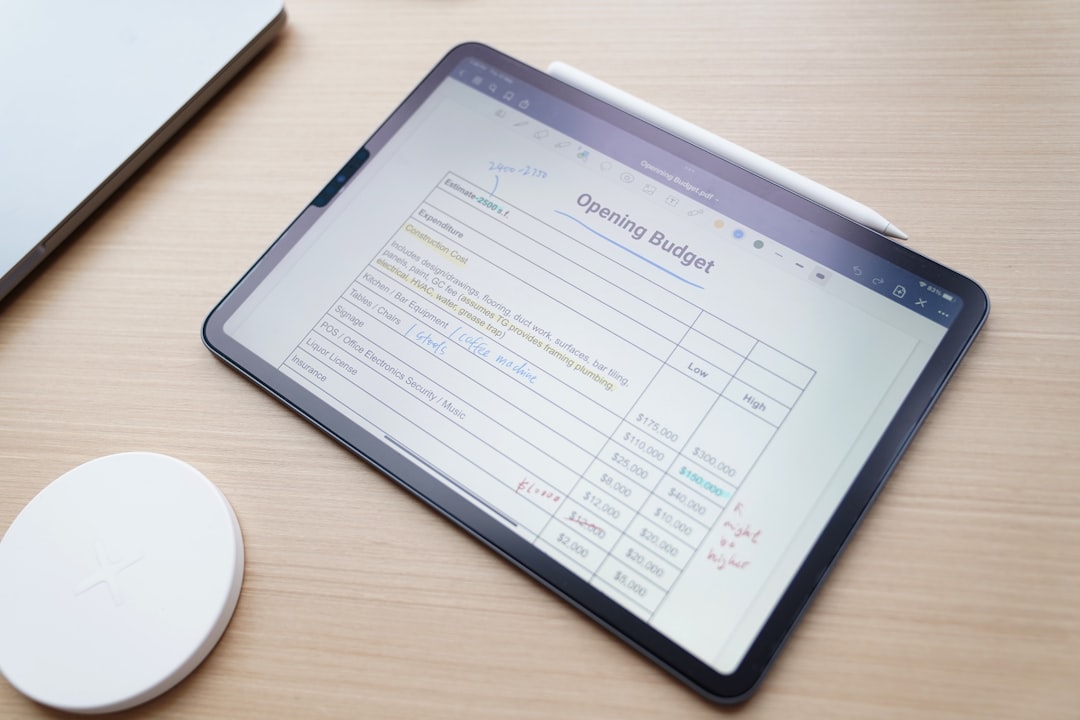
HMRC's powers under Schedule 36 of the Finance Act 2008 are broad. An information notice can be issued to any person HMRC believes holds information relevant to a taxpayer's liability. That includes software companies.
If your accounting data lives in a cloud platform, HMRC does not need to knock on your door first. They can, in certain circumstances, go directly to the platform. The taxpayer may not be notified until after the fact, or at all, if HMRC obtains tribunal approval to withhold the notice.
This is not a reason to panic. HMRC does not routinely trawl through sole trader accounting software looking for discrepancies. But it is a reason to understand that your digital records are not private in the way a locked filing cabinet might once have been. When you submit quarterly updates under Making Tax Digital, you are already sharing data with HMRC in a structured, machine-readable format. The data inside your software is the layer beneath that, the raw material, and it sits in a jurisdiction defined by your provider's terms of service, not by your expectations of privacy.
The MTD Factor: Why This Gets More Complicated in 2026
Making Tax Digital for Income Tax Self Assessment becomes mandatory for sole traders and landlords with income above £50,000 from April 2026. Those earning above £30,000 follow in April 2027.
What this means in practice is that your accounting software is no longer optional plumbing. It becomes the pipe through which your legal obligations flow. You will need MTD-compatible software to keep digital records and submit quarterly updates to HMRC. If your free tool does not support this, you will need to switch, and as explored in Making Tax Digital Accounting Software: The Switching Cost Nobody Quotes, switching carries costs that nobody puts in the brochure.
More to the point: committing to free accounting software now, ahead of MTD, is a commitment to feeding that platform your financial history for years. The data picture you build between now and 2026 will become the baseline against which your quarterly MTD submissions are understood. If you switch platforms before going live on MTD, you lose continuity. If you stay on a free platform that is not genuinely MTD-compatible, you face a scramble.
The HMRC MTD Software: How the Approved List Actually Works post is worth reading if you want to understand how HMRC's compatibility criteria work in practice, because "MTD-ready" on a marketing page and "fully compatible" on the approved list are not always the same thing.
Who Audits the Auditors?

Here is the structural absurdity: HMRC mandated that sole traders use third-party commercial software to comply with Making Tax Digital, rather than building a free, government-owned tool. The Treasury's own impact assessments acknowledged this would generate costs for small businesses. The software industry lobbied against a free HMRC-built alternative. The lobbying worked.
The result is a compliance regime where sole traders are legally required to use software, but the government takes no responsibility for what that software does with the data it collects. HMRC publishes a list of compatible products. It does not audit their privacy practices, their data retention policies, or their business models.
The Free Making Tax Digital Software: Who Bears the Risk? post makes this point from the risk angle. The data angle is the same argument from a different direction: the person bearing the risk is you, and the risk includes giving a commercial entity an increasingly detailed picture of your financial life in exchange for a product they can modify, monetise, or discontinue at any point.
People also ask
What a Sole Trader on £65,000 Should Actually Do
Let us make this concrete. You are a self-employed electrician turning over £65,000 a year. You have been using a free bookkeeping app to log expenses and issue invoices. It works fine. You are not paying anything.
From April 2026, you must use MTD-compatible software. Your free app's help centre says it is "working on MTD support." That phrase has appeared on product roadmaps since 2019. It may mean next quarter. It may mean never.
Your options at that point are:
Option one: Stay and hope. If MTD support arrives, you are fine. If it does not, you have a data migration problem six months before your first mandatory quarterly deadline, at a moment when your financial records are already embedded in the platform.
Option two: Switch now to a paid MTD-compatible tool, accept the monthly cost (typically £10-£20 for a sole-trader-appropriate plan), and build your MTD habit before it is legally required. The Cheapest MTD Software: What Low Price Actually Buys You post covers what the bottom of the paid market looks like.
Option three: Choose a tool specifically built for sole traders, where the pricing is transparent, the MTD compatibility is confirmed and tested, and the business model does not depend on monetising your cashflow data. TapTax exists precisely for this: one straightforward subscription, MTD-ready, designed for the electrician who does not want to become a part-time accountant.
At £65,000 turnover, the penalty for a missed quarterly MTD submission starts at £200 per failure point under the new points-based system HMRC introduced for MTD. Four missed quarters in a year could mean £800 in penalties before a single pound of tax is disputed. The cost of proper software is not a luxury at that scale; it is insurance with a guaranteed annual premium that is lower than one penalty.
The Honest Calculation

Free accounting software UK is not a trap, exactly. But it is a trade, and most sole traders make it without knowing the terms. You trade your financial data, your client patterns, your cashflow profile, and your upgrade path for a zero on a monthly bill.
For very simple businesses with low turnover, genuinely limited transactions, and no immediate MTD obligation, that trade might be rational. For a sole trader earning above £50,000, building a growing client book, and approaching the MTD mandatory threshold, it is worth running the honest calculation.
The monthly cost of proper MTD software is roughly equivalent to one hour of your billable rate. The cost of a platform that quietly monetises your data, locks your records in a proprietary format, and then charges you to export them when you want to leave is harder to calculate, because nobody puts it in the small print.
That is, of course, the point.
If the opening question still feels abstract, consider this: you would not hand your invoices, your client list, and your bank statements to a stranger in exchange for a free spreadsheet. Free accounting software is not meaningfully different. The only question is whether the terms of that exchange are ones you have chosen consciously, or ones that were chosen for you by a pricing page.
You might also like
File your MTD quarterly updates in minutes
TapTax connects to your bank, categorises expenses automatically, and submits to HMRC with a tap. Free plan, no card required.
Start freeFrequently asked questions
Does HMRC have its own free accounting software for sole traders?
No. HMRC deliberately chose not to build a free government-owned tool for Making Tax Digital compliance, relying instead on approved third-party commercial software. This decision followed lobbying from the software industry and has been criticised for creating mandatory costs for small businesses.
What happens to my accounting data if my free software provider shuts down or removes the free tier?
If a free provider discontinues its service or moves your features to a paid tier, you may lose access to your records or face a data export fee. Before April 2026, when MTD becomes mandatory, this could leave you scrambling to rebuild your digital records in a new platform under deadline pressure.
Can a UK software company legally share my accounting data with third parties?
Yes, provided it is disclosed in their privacy policy and terms of service. Many free accounting platforms share anonymised or aggregated data with financial services partners, lenders, or credit agencies. This is legal under UK GDPR if properly disclosed, but the disclosures are often buried in lengthy policy documents.
What is the minimum I should spend on MTD-compatible accounting software as a sole trader?
Genuinely MTD-compatible software with quarterly submission capability typically starts at around £10-£15 per month for sole trader plans. This covers digital record-keeping and all five annual submissions MTD requires. Anything marketed as free should be tested carefully against the HMRC approved software list before the April 2026 deadline.
What are the penalties for missing an MTD quarterly submission deadline?
HMRC's points-based penalty system assigns one penalty point per missed MTD submission. Once you reach the threshold (two points for quarterly filers), a £200 penalty is charged, with further £200 penalties for each subsequent failure. Persistent non-compliance can trigger higher penalties and interest on unpaid tax.
Work out your own numbers
You might also like
Stop dreading your tax return.
TapTax connects to your bank, categorises expenses automatically, and submits quarterly updates to HMRC. Free plan, no card required.
Get started free