
Accounting Software for Sole Traders: Who Owns Your Records?
Sole trader accounting software vendors get acquired and shut down. Here is what that means for your MTD digital records and what to check before you commit.
Your accounting software subscription lapses mid-April. HMRC issues an enquiry notice in June. When you try to retrieve your quarterly MTD records from the previous two years, the export function returns a blank CSV. The firm that built your software was acquired fourteen months ago; the new owner migrated to a different platform and quietly discontinued the legacy data tools.
This is not a hypothetical invented to alarm you. It is a specific, foreseeable risk that the accounting software industry has no incentive to advertise and that HMRC's own guidance documents never address.
- Your MTD digital records must be kept for at least five years after filing; the software holding them may not exist that long.
- When an accounting software vendor is acquired or shuts down, the standard response is a 30 to 90 day export window, then deletion.
- Most standard exports give you PDF summaries or flat CSV files, not the timestamped audit logs HMRC needs in an enquiry.
- Before committing to any sole trader accounting software, ask specifically about post-cancellation access, export formats, and what happens to your data if the company is sold.
The market for accounting software aimed at sole traders is dominated by a handful of large vendors, several of which have been acquired, merged, or significantly repriced in the past decade. For most sole traders using these tools before Making Tax Digital, the stakes were manageable: if your software disappeared, you lost convenience, not compliance. After April 2026, that calculation changes entirely. Your quarterly digital records are your HMRC audit trail. The question of who owns them, and what access you retain after you cancel or your vendor is acquired, is no longer academic.
- Digital Records (MTD)
- Under Making Tax Digital for Income Tax, digital records are the underlying transaction data your accounting software holds: income received, allowable expenses, and their categorisation. These are not summaries or reports. They are the source records HMRC can examine in an enquiry, and you are legally required to retain them for at least five years after the relevant tax year's filing deadline.
What HMRC Actually Requires You to Keep
HMRC's MTD for Income Tax rules require you to maintain digital records of every business transaction: income received, allowable expenses, and the categorisation that determines your tax liability. These records must be kept for at least five years after the 31 January filing deadline for the relevant tax year.
That five-year requirement is not a formatting guideline. It is a legal obligation. If HMRC opens an enquiry (which they can do at any point within that five-year window, or longer in cases of suspected fraud), your digital records are what demonstrates your quarterly submissions were accurate. A PDF summary, a printed bank statement, or a message saying "we no longer support that export format" will not satisfy an inspector.
The practical question is straightforward: where do those records live, and who controls access to them?
The Consolidation Nobody Warned You About

The UK accounting software market has consolidated significantly since 2015. FreeAgent, which serves over 180,000 small business customers in the UK, was acquired by NatWest Group (then Royal Bank of Scotland) for £53.3 million in 2018. Sage, the FTSE 100 incumbent, acquired AutoEntry in 2021. Intuit, the US parent of QuickBooks, has raised UK subscription prices substantially across multiple rounds and has made several acquisitions of its own across the sector.
None of these transactions are inherently damaging to customers. NatWest has so far kept FreeAgent running as a standalone product, and offering it free to business banking customers is a genuine benefit for those who qualify. But the pattern reveals something important: the accounting software you chose for its features, its price, or its independence from any particular bank or institution may no longer be any of those things. And the next acquisition may not proceed as smoothly.
Smaller vendors are more exposed. Several well-regarded products aimed specifically at sole traders have been acquired and subsequently discontinued, merged into larger platforms, or quietly sunset without adequate notice. When a vendor shuts down a product, the standard outcome is this: export your data in the next 30 to 90 days, or lose it.
Thirty to ninety days to retrieve five years of MTD records. In whatever format the outgoing vendor decides to provide.
What "Export Your Data" Actually Gives You
Every accounting software vendor offers data export. In practice, what you receive varies enormously, and the gap between marketing language and legal reality is widest here.
CSV of transactions: A flat file of your income and expenses, often without the categorisation metadata or audit timestamps that show HMRC when records were created or amended. Useful for building a spreadsheet; less useful for defending a quarterly submission in an enquiry.
PDF reports: Summaries of your accounts, adequate for a mortgage application or a quick reference, but not the underlying digital records MTD requires you to retain. HMRC inspectors are not interested in a nicely formatted annual summary.
API access: Some vendors offer an API allowing structured, timestamped record exports in a machine-readable format. This is the gold standard for portability. Very few products aimed at individual sole traders provide it without a separate developer contract.
Nothing usable: When a product is discontinued as part of an acquisition, the acquiring company has no obligation to support the original export formats. If the migration path does not include your specific data structure, that data may be practically inaccessible within weeks of the announcement.
The question to ask any accounting software vendor, before committing, is precise: "If I cancel my subscription today, what format is my data in, how long do I retain access to the export portal, and does the export include the audit log HMRC would need in an enquiry?" If the sales team cannot answer those three questions specifically, assume the answer to the third is no.
People also ask
The Terms You Probably Did Not Read

The standard terms and conditions for accounting software sold to sole traders typically include three provisions most customers skip past on the way to the "I agree" button.
First, a data licence granting the vendor rights to use your records for "product improvement" and "aggregated analytics," the precise scope of which is rarely defined and almost never negotiated.
Second, a data retention clause specifying how long your records are kept after cancellation. Ninety days is common; some vendors offer six or twelve months. A few offer nothing specific, which in practice means deletion as soon as it is operationally convenient for the vendor.
Third, and most significant, a succession clause allowing the vendor to transfer your data to a buyer in the event of an acquisition, merger, or asset sale. This clause is standard across the industry. It is also the mechanism by which your records pass to an entity that made no promises to you and has no direct incentive to keep a discontinued product's export infrastructure running.
This is not an edge case constructed to alarm you. It is the documented sequence of events for users of several discontinued UK accounting products over the past five years. The sole traders affected were not careless; they were using software that was, at the time they chose it, perfectly adequate for their needs. The market moved around them.
The Specific Risk After April 2026
Before Making Tax Digital for Income Tax, this risk was inconvenient but survivable. If your software disappeared, you had your bank statements, your paper receipts, and your annual self-assessment return as fallbacks. HMRC's enquiries were document-based, and a coherent picture could often be assembled from multiple sources after the fact.
MTD changes this in a specific way. The quarterly updates you submit to HMRC from April 2026 onward reference the digital records your software holds. If HMRC questions a quarterly update from two years ago, they are asking about records that must exist in digital form, with the categorisation and timestamps your software created at the time of entry.
A bank statement that was never processed through MTD-compliant software is not a digital record in the sense HMRC means. Reconstructing two years of quarterly submissions from bank statements and memory is precisely the kind of situation that invites deeper scrutiny rather than resolving it. That is the scenario the "export your data" window was never designed to prevent.
This is why questions about HMRC compatible software go beyond feature checklists, and why the five-year problem for sole trader accounting software is about more than rising subscription costs. The audit trail your software creates, and whether you control it when the commercial relationship ends, is a compliance question as much as a consumer one.
What to Ask Before You Commit
These questions take fifteen minutes to research and could save you significant difficulty if HMRC ever opens an enquiry.
Data export format: Can you export your records in a structured format (JSON, XML, or a CSV that includes timestamps and categorisation codes alongside transaction amounts)? PDF summaries are not adequate for an audit. Ask to see a sample export before you sign up.
Post-cancellation access window: How long do you retain access to the export portal after cancellation? Any vendor that cannot give you a specific number rather than a vague commitment to being "reasonable" should be treated with caution.
Audit log inclusion: Does the export include a log of when records were created, amended, or categorised? This is the element most relevant to an HMRC enquiry and the one most often absent from standard exports.
Succession and acquisition provisions: What happens to your data if the company is sold? Can the vendor provide a data processing agreement specifying the outcome in that event? Established vendors generally can. If the response to this question is confusion or deflection, that is useful information.
Corporate structure and ownership: Is the vendor independent, VC-backed, or a subsidiary of a larger company? This does not disqualify any category, but it informs the acquisition risk and the incentives driving product decisions. A VC-backed startup optimising for an exit event has different priorities to an independent business with its own long-term interests in customer retention.
These are questions any reputable vendor should be able to answer clearly. If responses are vague, incomplete, or treated as unusual, that itself is a data point worth weighing.
A Simpler Frame for a Complex Problem
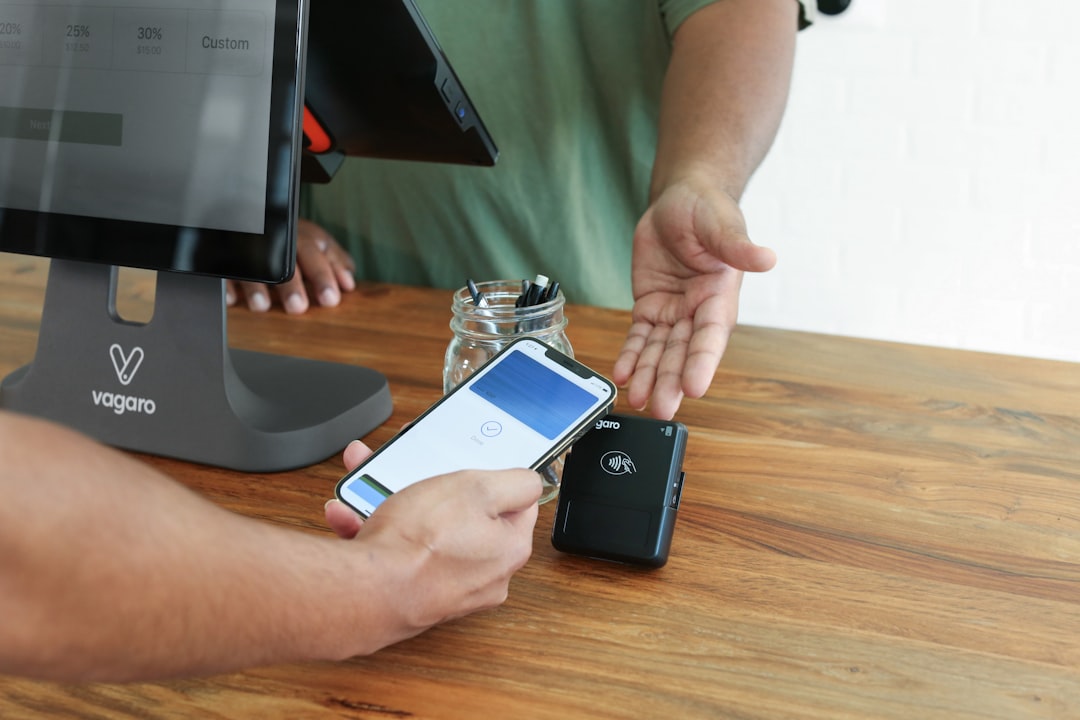
If you are a plumber, an electrician, or a self-employed consultant, you did not sign up to become an expert in software licensing terms. The reasonable expectation is that accounting software you pay for will keep your records safe, let you access them when you need them, and not disappear without adequate notice. That expectation is not unreasonable. It is also not guaranteed by the current market.
The minimum viable protection is straightforward: choose accounting software sole traders can rely on for MTD that is built specifically for Making Tax Digital rather than retrofitted for it, that can export your data in a structured format at any point, and whose vendor can clearly articulate what happens to your records if you cancel or if the company is acquired. HMRC compatible software labels tell you nothing about data portability. The label is an API connectivity test, not a custody agreement.
TapTax is built for this specific scenario: MTD for Income Tax compliance from the ground up, with quarterly records stored in a format you can export, access, and present to HMRC without depending on a vendor remaining solvent and independent for the next five years. Your records belong to you, and the system is designed to make that true in practice, not just in the terms and conditions.
April 2026 is the deadline HMRC set. The records you generate from that point could be scrutinised until 2031 or later. The software holding those records should be one you chose with that time horizon in mind, not one you signed up for in a hurry and have not reviewed since.
You might also like
File your MTD quarterly updates in minutes
TapTax connects to your bank, categorises expenses automatically, and submits to HMRC with a tap.
Frequently asked questions
What happens to my sole trader accounting records if my software provider is acquired?
Under standard software T&Cs, your data transfers to the acquiring company. The acquirer may discontinue the original product, change the export options, or impose a deletion window (commonly 90 days). You should export a full, structured copy of your records immediately if your provider announces an acquisition or shutdown.
Does HMRC accept PDF exports from accounting software as digital records?
No. HMRC's MTD for Income Tax requires digital records that include transaction-level data with categorisation, not just summary reports. PDF summaries may be useful as a reference but do not constitute the underlying digital records you are legally required to retain for at least five years after filing.
Which accounting software for sole traders gives you full ownership of your MTD records?
Look for software that provides structured data exports (CSV with timestamps and categorisation metadata, or JSON/XML formats) rather than PDF-only reports. Before committing, ask the vendor specifically what format your records are exported in, how long you can access the export portal after cancellation, and whether the export includes an audit log.
Can I change accounting software after April 2026 without losing MTD compliance?
Yes, but timing matters. You must export a complete, timestamped archive of your existing digital records before switching, as HMRC can request those records for up to five years after the relevant filing deadline. Switching mid-tax-year also splits your audit trail across two systems, which complicates any future HMRC enquiry into that year.
How long must sole traders keep digital records under MTD for Income Tax?
HMRC requires digital records to be kept for at least five years after the 31 January self-assessment filing deadline for the relevant tax year. Records for the 2025/26 tax year (filed by 31 January 2027) must be retained until at least 31 January 2032. Your accounting software must remain accessible, or your records must be exported to a format you control, for this entire period.
You might also like
Stop dreading your tax return.
TapTax connects to your bank, categorises expenses automatically, and submits quarterly updates to HMRC. Free plan, no card required.