
Making Tax Digital in
Uxbridge
Uxbridge sole traders: here is exactly when Making Tax Digital applies to you, what the quarterly deadlines mean in practice, and how to stay on top of it all.
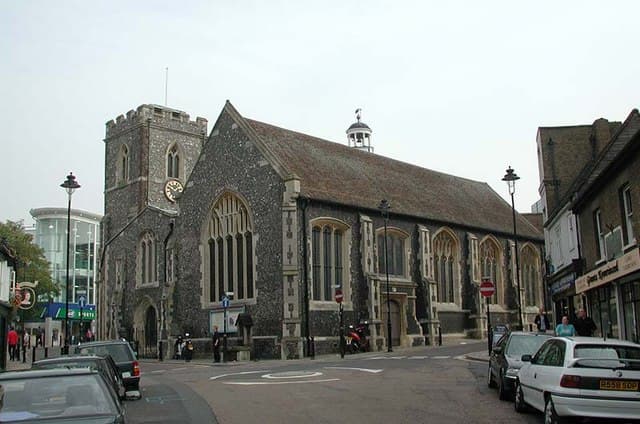
Uxbridge sits at the western end of the Elizabeth line, which means a steady flow of commuters, a thriving retail corridor on the High Street, and a self-employed economy shaped by proximity to Heathrow, Brunel University, and a dense belt of light industrial and logistics businesses stretching out towards the M25. If you run a white-van trade, freelance in AV or events, tutor students from Brunel or nearby schools, or manage a handful of Hillingdon rental properties alongside a day job, Making Tax Digital for Income Tax is heading your way.
- MTD for Income Tax
- HMRC's requirement for sole traders and landlords to keep digital records and submit four cumulative quarterly updates each year, alongside the annual tax return.
MTD for Income Tax is not a local pilot or a Greater London initiative. It is UK-wide legislation, and the rules are identical whether you are based in the Uxbridge town centre or out near Stockley Park. What matters is your qualifying income: your gross self-employment turnover plus any gross property income, counted before you deduct a single expense.
Which Uxbridge Traders Hit the Threshold First
The first wave, from 6 April 2026, catches anyone whose qualifying income tops £50,000. In the Uxbridge and Hillingdon area that profile fits a recognisable set of people: electricians and plumbers covering residential work across west London where day rates are well above the national average; IT contractors who catch the Piccadilly or Elizabeth line into the City or Canary Wharf; and sole-trader logistics operators running delivery routes for businesses on the Stockley Park estate.
The second wave, April 2027, brings in those earning £30,000 to £50,000. Here you start picking up self-employed tutors (Brunel attracts a lot of postgraduate work that generates freelance teaching on the side), hair and beauty professionals working from home studios in the residential streets around Cowley and Hillingdon, and small cleaning or maintenance contractors.
The £20,000 threshold arrives in April 2028. At that level you capture the part-time self-employed: the Airbnb host near the Heathrow flight path who rents out a room, the market trader on Uxbridge's outdoor pitches, or the courier picking up gig-economy work around the airport.
6 Apr 2026
MTD start date if qualifying income exceeds £50,000
£200
Penalty once you hit the points threshold for a missed quarterly update
4 per year
Quarterly updates required under MTD, plus a final declaration
If you are an Uxbridge-based AV or events contractor turning over £62,000
Brunel University, the Intu shopping centre, and the corporate campuses around Stockley Park all generate regular events and production work. Say you invoice £62,000 gross per year in AV contracts. That puts you firmly in the April 2026 cohort. Under MTD you will submit your first quarterly update covering 6 April to 5 July 2026 by 7 August 2026. Miss a deadline in the 2026 to 2027 tax year and there is no penalty point, though the update is still owed; from 2027-28 each missed deadline earns a point, and four points bring a £200 penalty, then £200 for each further missed deadline. Your tax code on any PAYE income will remain a standard 1257L under England's rest-of-UK bands, but your self-employment tax liability (basic rate 20% on income above £12,570, higher rate 40% above £50,270) will need to be tracked and declared digitally throughout the year rather than summed up in January. Use the sole trader tax calculator to see what your quarterly liability looks like before you file.
The Four Quarterly Deadlines You Need in Your Diary
Each quarterly update covers a cumulative period from the start of the tax year, not just the most recent three months. That catches a lot of people off guard: you are not simply reporting what came in last quarter, you are reporting the running year-to-date total each time.
| Quarter | Period covered | Filing deadline |
|---|---|---|
| Q1 | 6 Apr to 5 Jul | 7 August |
| Q2 | 6 Apr to 5 Oct | 7 November |
| Q3 | 6 Apr to 5 Jan | 7 February |
| Q4 | 6 Apr to 5 Apr | 7 May |
| Final declaration | Full year reconciliation | 31 January |
The final declaration on 31 January replaces the old Self Assessment deadline you may already know. It is the moment you lock in your figures, claim any allowances, and settle your tax bill for the year.
For a fuller breakdown of how the quarterly mechanics work in practice, the MTD for sole traders guide walks through each stage from first sign-up to final declaration.
The Mistake Many West London Sole Traders Make with Qualifying Income
Because Uxbridge is close to Heathrow and sits inside a borough with a competitive rental market, a significant number of self-employed people here also receive rental income, often from a spare room, a garage conversion, or a small buy-to-let. The critical point is that HMRC adds your gross property income to your gross self-employment turnover when calculating whether you cross the threshold. A courier turning over £28,000 in delivery fees who also collects £12,000 a year in rent is sitting on £40,000 of qualifying income and will be caught by the April 2027 wave, not 2028. Many people in that position think the rental side is a minor matter handled at Self Assessment and do not realise it counts.
If you are unsure how your income sources add up, checking your tax code is a useful starting point for understanding how HMRC is currently treating your income, and whether any adjustments have already been applied to your PAYE coding notice.
How to File from Uxbridge Without Sitting at a Desk
MTD requires HMRC-recognised software. A spreadsheet does not qualify on its own, and keeping a paper cash book definitely does not. You need an app or a platform that can generate and transmit the quarterly updates in the correct format.
TapTax is built for exactly the kind of mobile, on-the-go sole trader who drives between jobs across west London. Import your business bank statement by CSV and TapTax brings in your transactions in a couple of minutes, using AI to categorise your expenses: fuel, materials, professional fees, phone, and so on. When you pick up a paper receipt, scan it with the app and it is logged instantly. At the end of each quarter, TapTax builds your cumulative update and you file it with a single tap from wherever you are, whether that is the Brunel campus car park or outside a client site on the Stockley Park estate.
The free plan requires no card and no commitment. It is designed so you can start before your mandate date, build the habit of quarterly tracking, and arrive at 6 April 2026 (or whichever threshold applies to you) with a full year of clean digital records already in place.
Getting Ready: Three Things to Do This Month
First, work out your qualifying income. Add gross self-employment turnover to gross rental income (if any) and compare it to the thresholds above. If you are unsure of the tax you owe across those streams, the sole trader tax calculator gives you an instant estimate under England's bands.
Second, check whether your current bookkeeping method would survive HMRC scrutiny. If your records live in a spreadsheet, a notebook, or a shoebox of receipts, you will need a bridging solution or a full switch to MTD-compatible software before your mandate date.
Third, sign up for TapTax now, even if you do not hit the threshold until 2027. Starting your digital record-keeping early means less catching up, more accurate quarterly updates, and fewer surprises when your first real deadline arrives.
“Uxbridge traders juggling Heathrow contracts, Brunel work, and west London rental income cannot afford to discover their MTD threshold at the last minute.”
People also ask
Does Making Tax Digital apply to sole traders in Uxbridge?
Yes. MTD for Income Tax is UK-wide legislation with no geographic exemptions. If you are a sole trader or landlord based in Uxbridge and your qualifying gross income exceeds £50,000, you must comply from 6 April 2026. Lower thresholds of £30,000 and £20,000 follow in 2027 and 2028.
Does rental income count towards the MTD threshold?
Yes. HMRC adds your gross property income to your gross self-employment turnover before comparing the total to the threshold. This catches many people who think of their rental income as a small side matter; even a modest buy-to-let can push you over the line.
What happens if I miss a quarterly MTD deadline?
HMRC uses a points-based penalty system. Each missed quarterly update earns a penalty point. Reach 4 points and HMRC charges a £200 penalty, then £200 for each further missed deadline. Points accrue separately from any late-payment interest on tax owed.
Can I use a spreadsheet to comply with Making Tax Digital?
Not on its own. HMRC requires MTD-compatible software that can digitally link your records and submit quarterly updates directly to HMRC systems. Some bridging software can connect a spreadsheet to HMRC, but a dedicated app like TapTax is simpler and reduces the risk of filing errors.
Making Tax Digital for sole traders and landlords in Uxbridge
If you are a sole trader or landlord in Uxbridge, Making Tax Digital for Income Tax applies to you from 6 April 2026 if your qualifying income is over £50,000, and from 6 April 2027 if it is over £30,000. TapTax keeps your digital records and sends your quarterly updates to HMRC, and it is HMRC-recognised.
Start freeQuarterly expenses under MTD: the £90,000 rule
If your annual business turnover is £90,000 or less, HMRC lets you report a single consolidated expenses total in each Making Tax Digital quarterly update instead of breaking expenses down into itemised categories. Most sole traders in Uxbridge are under this threshold, so a quarterly update can be as simple as two figures: total income and total expenses. You still need to keep digital records of each individual expense - the relaxation only changes how much detail goes into the quarterly update itself.
Related guides and calculators
Signing up for Making Tax Digital
MTD guides for nearby areas
Frequently asked questions
Do Uxbridge sole traders need an accountant to comply with Making Tax Digital?
You do not need an accountant, but you do need HMRC-recognised software to submit your quarterly updates. Many Uxbridge sole traders are choosing to manage MTD themselves using mobile-first apps like TapTax, which automates categorisation and filing. TapTax is HMRC-recognised. An accountant can still be useful for tax planning, but software handles the compliance mechanics.
I earn income from a Heathrow-area logistics contract and also rent out a property. Do both count towards my MTD threshold?
Yes. HMRC combines your gross self-employment income with your gross property rental income to determine your qualifying income. If the combined total exceeds £50,000 you fall into the April 2026 cohort, even if either stream alone would sit below the threshold.
What are the quarterly deadlines under Making Tax Digital for Income Tax?
There are four quarterly updates each year: Q1 covers 6 April to 5 July and is due by 7 August; Q2 to 5 October, due 7 November; Q3 to 5 January, due 7 February; Q4 to 5 April, due 7 May. Each update is cumulative (year-to-date), not just the most recent quarter. A final declaration is due by 31 January.
What income tax rates apply to sole traders in Uxbridge?
Uxbridge is in England, so rest-of-UK income tax bands apply. The Personal Allowance is £12,570. Income above that is taxed at 20% up to £50,270, 40% on the portion up to £125,140, and 45% above that. These are the bands that will apply when HMRC processes your MTD final declaration each January.
When do I need to start using MTD-compatible software?
You must be using HMRC-recognised software from the start of the tax year in which you are mandated. For most higher-income Uxbridge sole traders that means having software in place from 6 April 2026. Starting earlier is strongly advisable so your digital records are complete for the full year rather than patched together in arrears.
Sources
Official guidance on GOV.UK.