
Making Tax Digital in
St Albans
St Albans sole traders face four quarterly MTD deadlines from April 2026. Here is exactly what you need to do, and when.
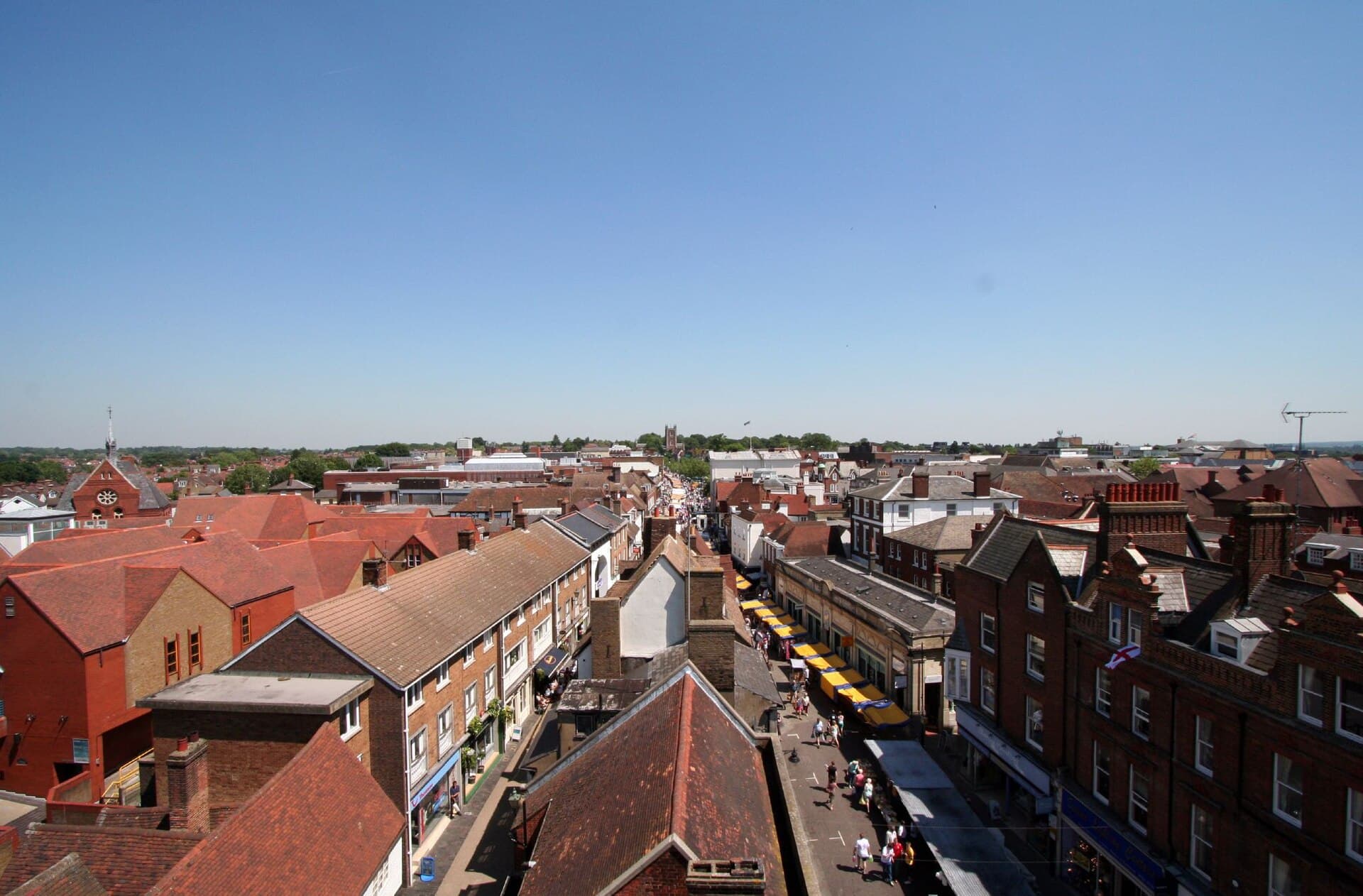
St Albans sits at one of the most affluent commuter intersections in the Home Counties, a city where a sizeable chunk of the working population splits its week between a London office and a home-based freelance practice. That IT contractor invoicing a Canary Wharf bank from a Georgian terrace near Verulam Road, the independent therapist running a clinic off Holywell Hill, the tradesperson whose van is parked outside a Victorian semi in Marshalswick every other morning: these are exactly the people HMRC has in its sights with Making Tax Digital for Income Tax (MTD for IT). If your gross self-employment turnover, or the combined total of that turnover plus rental income, clears certain thresholds, quarterly digital filing comes on top of the annual tax return you have always known, which moves into the same software.
- MTD for Income Tax
- HMRC's requirement for sole traders and landlords to keep digital records and submit four cumulative quarterly updates each tax year, alongside the annual tax return.
This is not a distant threat. The first wave hits on 6 April 2026, and plenty of St Albans-based freelancers, consultants and landlords are in that first wave right now without realising it. Read on to find out precisely where you stand, what the deadlines look like month by month, and how to make the whole thing take minutes rather than evenings.
Who in St Albans Gets Caught First, and When
The rollout moves in income bands:
| Qualifying gross income | MTD start date |
|---|---|
| Over £50,000 | 6 April 2026 |
| £30,000 to £50,000 | 6 April 2027 |
| £20,000 to £30,000 | 6 April 2028 |
| Under £20,000 | Not yet mandated |
"Qualifying income" means gross receipts before any expenses, combining self-employment turnover with any property rental income. A St Albans landlord who rents out a flat near the station and also does some freelance project management does not assess each stream separately; HMRC adds them together.
St Albans is one of the more expensive postcodes in Hertfordshire, which matters because local day rates and rents reflect that. A freelance UX designer charging out of a co-working space near St Peter's Street, for instance, might bill £400 a day and work 140 days a year, landing at £56,000 gross turnover. That person is firmly in the April 2026 cohort. If you are unsure where your own income sits, the TapTax sole trader tax calculator will give you a clear picture of your position and the tax you are likely to owe.
6 Apr 2026
MTD start date for income over £50,000
£200
Penalty once HMRC points threshold is reached
4
Quarterly updates required each tax year
The Four Deadlines Every St Albans Freelancer Needs in Their Calendar
The shift to quarterly reporting is the biggest practical change MTD brings. Instead of one return filed each January, you submit four cumulative updates throughout the year, then a final declaration by 31 January. Here is the full schedule:
| Quarter | Period covered | Submission deadline |
|---|---|---|
| Q1 | 6 Apr to 5 Jul | 7 August |
| Q2 | 6 Apr to 5 Oct | 7 November |
| Q3 | 6 Apr to 5 Jan | 7 February |
| Q4 | 6 Apr to 5 Apr | 7 May |
| Final declaration | Full year | 31 January |
Note that each update is year-to-date, not a snapshot of the most recent quarter alone. By the time you file Q3, you are summarising nine months of income and expenses, not three. For a full explanation of how the mechanics work in practice, the TapTax guide to Making Tax Digital walks through the process from first login to final declaration.
If you are a St Albans IT contractor billing £72,000 a year
Imagine Priya, a data architect who contracts through a Hertford Road Ltd company but also takes occasional direct freelance work that pushes her sole trader income to £72,000 gross. She is caught from 6 April 2026. Her first quarterly deadline is 7 August 2026, covering the period 6 April to 5 July. If she misses that, she earns one penalty point. From the 2027 to 2028 tax year, each missed quarterly deadline earns a penalty point, and 4 points bring a £200 penalty. Miss all four quarters and the financial pain becomes meaningful, but the administrative chaos of trying to reconstruct five months of transactions at once is arguably worse. Keeping records current week by week, not in a January panic, is the entire point.
What St Albans Sole Traders Get Wrong About MTD
The most common misconception among St Albans-based professionals is that MTD is essentially the same as Self Assessment with more steps. It is not. Three misunderstandings keep coming up:
"I can still use a spreadsheet." Technically you can, but only if the spreadsheet is bridged to HMRC-recognised software that formats and transmits the data correctly. A standalone Excel file sitting on your desktop does not qualify. You need compliant software to file.
"My accountant will handle it all." Your accountant can absolutely help, but the obligation to keep digital records throughout the year falls on you, not them. They cannot conjure a compliant record from a shoebox of receipts delivered in January. The record-keeping must be live and digital.
"It only affects my tax code if I owe more." MTD changes your filing obligations regardless of your tax liability. Your tax code, which for most sole traders in England will still be something like 1257L reflecting the £12,570 personal allowance, does not change with MTD. But if you have ever wondered whether your PAYE code accounts for your self-employed income correctly, it is worth a moment to check your tax code to make sure you are not over- or underpaying throughout the year.
The St Albans Property Income Complication
St Albans has some of the highest house prices in the East of England commuter belt. A lot of homeowners here have converted a loft, rented a room, or held onto a second property as an investment. Once you add rental income to even modest freelance earnings, the combined qualifying total can push you into an earlier MTD band than you expected.
Take a semi-retired financial adviser in Harpenden who earns £22,000 in consultancy fees and also receives £14,000 a year from a rental flat near the St Albans City station. Individually, neither figure triggers the 2026 or 2027 thresholds. Together they come to £36,000, which puts her squarely into the April 2027 cohort. Missing that detail means filing the wrong way for an entire year, with penalties to follow.
Filing From St Albans in One Tap
TapTax is designed specifically for the kind of mobile, busy sole trader that St Albans produces in abundance. Whether you are on the 7:14 Thameslink to Farringdon or catching up between client calls in a Café Nero on Chequer Street, the app does three things for you: it imports your business bank statements, categorises your income and expenses using AI, and scans any paper receipts via your phone camera. When a quarterly deadline approaches, you review what the app has compiled and file with one tap directly to HMRC.
There is a free plan with no card required to get started, which means there is no reason to delay setting up digital records now, well before 6 April 2026.
Getting Ready Today: Three Steps for St Albans Sole Traders
The traders who struggle with MTD are those who treat it as a January problem. The ones who sail through are those who treat record-keeping as a weekly habit before any deadline exists. Three concrete actions to take now:
- Work out your qualifying income. Add gross self-employment turnover and gross rental receipts (before any expenses). Use the sole trader tax calculator if the arithmetic feels uncertain.
- Identify your start date from the table above and put the first quarterly deadline in your calendar with a two-week warning.
- Download TapTax and import your bank statement. The sooner your records are digital and live, the less reconstruction you will need to do when August 2026 arrives.
MTD is a genuine shift in how sole traders interact with HMRC, but it is not an unmanageable one. A few minutes every week is genuinely all it takes when the right software is doing the heavy lifting.
“In a city full of people who commute to London to do high-value work, the last thing you need is HMRC admin eating into the time you actually bill for.”
People also ask
Does Making Tax Digital apply to sole traders in St Albans?
Yes. MTD for Income Tax applies UK-wide, including St Albans. If your gross self-employment income, or the combined total of your self-employment and rental income, exceeds £50,000, you must comply from 6 April 2026. Lower thresholds of £30,000 and £20,000 follow in 2027 and 2028 respectively.
Does adding rental income to freelance earnings affect when MTD starts for me?
It can make a significant difference. HMRC combines gross self-employment income and gross rental income to arrive at your qualifying total. A St Albans sole trader earning £28,000 in fees and £15,000 in rent has qualifying income of £43,000, pushing them into the April 2027 cohort rather than April 2028.
What happens if I miss a quarterly MTD deadline?
HMRC operates a points-based penalty system. Each missed quarterly submission earns one penalty point. Once you reach the points threshold (four points for quarterly filers), a £200 penalty is charged, and further penalties accumulate from there. Points reset after a clean period of compliance.
Can I use a spreadsheet for MTD in St Albans?
Not on its own. You need HMRC-recognised MTD-compatible software to submit quarterly updates. A spreadsheet can form part of your record-keeping system if it is linked to compliant bridging software, but a standalone spreadsheet filed manually does not meet the MTD requirement.
Making Tax Digital for sole traders and landlords in St Albans
If you are a sole trader or landlord in St Albans, Making Tax Digital for Income Tax applies to you from 6 April 2026 if your qualifying income is over £50,000, and from 6 April 2027 if it is over £30,000. TapTax keeps your digital records and sends your quarterly updates to HMRC, and it is HMRC-recognised.
Start freeQuarterly expenses under MTD: the £90,000 rule
If your annual business turnover is £90,000 or less, HMRC lets you report a single consolidated expenses total in each Making Tax Digital quarterly update instead of breaking expenses down into itemised categories. Most sole traders in St Albans are under this threshold, so a quarterly update can be as simple as two figures: total income and total expenses. You still need to keep digital records of each individual expense - the relaxation only changes how much detail goes into the quarterly update itself.
Related guides and calculators
Signing up for Making Tax Digital
MTD guides for nearby areas
Frequently asked questions
Do I need an accountant in St Albans to comply with Making Tax Digital?
You are not legally required to use an accountant for MTD. The obligation to keep digital records and submit quarterly updates rests with you as the sole trader. A good accountant remains valuable for tax planning, but HMRC-recognised software like TapTax allows many sole traders to manage their own quarterly submissions without professional intermediaries.
My St Albans rental income is modest. Does it still count towards the MTD threshold?
Yes. HMRC adds your gross rental receipts to your gross self-employment turnover when calculating qualifying income. Even a small rental income can tip you into an earlier MTD band. Always use the combined figure, not each stream in isolation, when checking which start date applies to you.
What is a qualifying income for MTD purposes?
Qualifying income is your gross self-employment turnover plus gross property rental income, both measured before deducting any expenses. It is not profit. This matters because even a sole trader with modest net earnings can have high qualifying income if their turnover is large.
What is the quarterly filing deadline for the first MTD quarter?
The first quarter covers 6 April to 5 July. The submission deadline is 7 August. This applies from the first tax year you are mandated to use MTD, so for most higher earners that means 7 August 2026 is the first hard deadline you need to meet.
Is the final declaration under MTD the same as the current Self Assessment tax return?
It serves a similar purpose: confirming your total income, claiming reliefs and finalising your tax liability for the year. The deadline remains 31 January following the end of the tax year, the same as now. However, the bulk of your record-keeping and reporting will already have been done through the four quarterly updates, so the final declaration should require far less work than the current annual return.
Sources
Official guidance on GOV.UK.