
Making Tax Digital in
Peterborough
Peterborough's self-employed community, from Cathedral Quarter traders to Fenland delivery drivers, needs to be MTD-ready by April 2026.
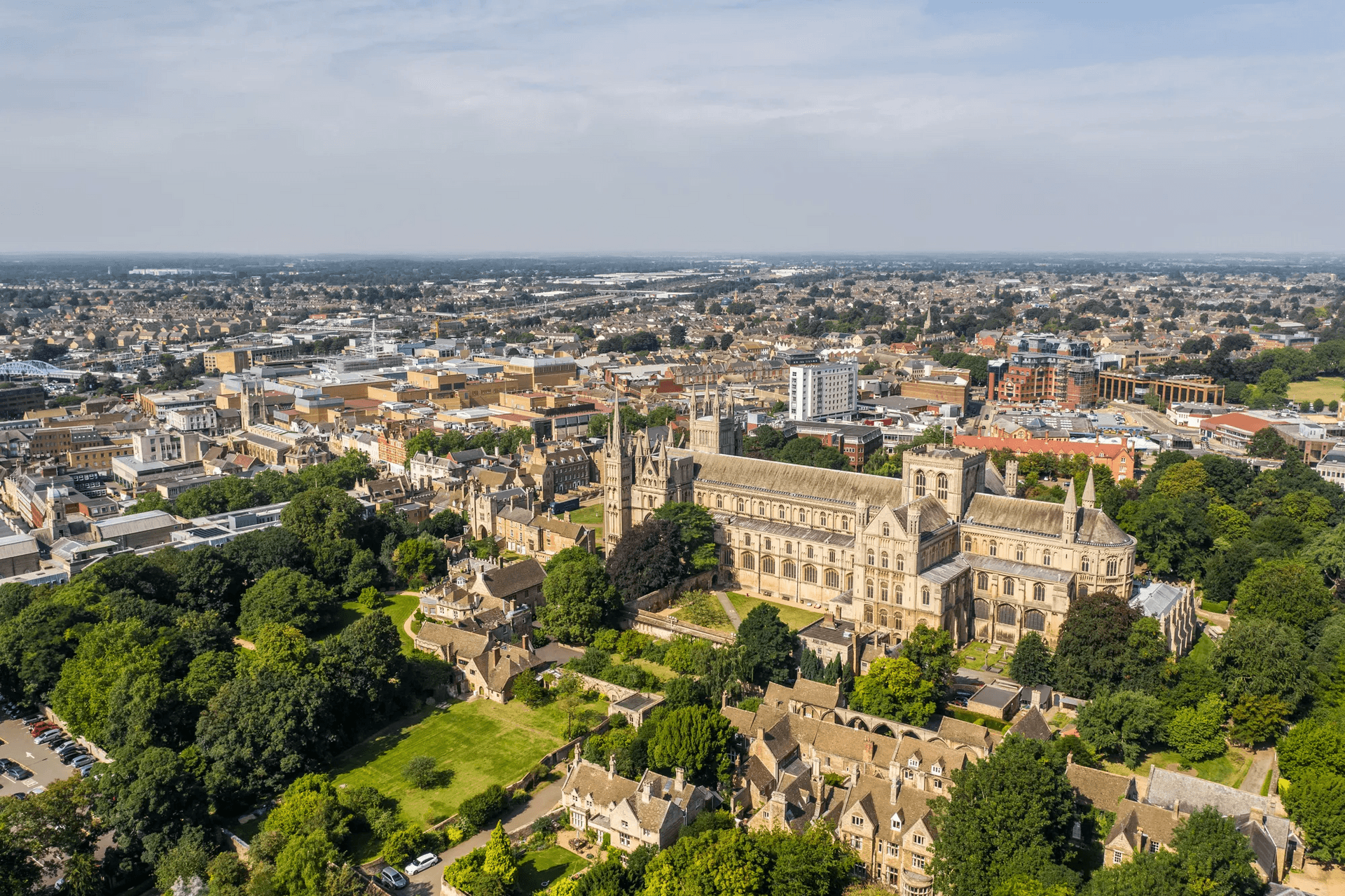
Peterborough sits at a crossroads, quite literally. The A1, the East Midlands Railway main line and the A47 all converge here, which is exactly why the city punches above its weight for logistics, distribution and haulage. Warehouses and fulfilment centres ring the city, and behind every HGV contractor or owner-operator delivery driver is a sole trader filing a Self Assessment return. From April 2026, that annual return gets replaced by something more demanding: Making Tax Digital for Income Tax.
MTD applies to every qualifying sole trader and landlord across England, and Peterborough is no exception. Whether you are an independent haulage contractor working out of the Bretton industrial estate, a market trader at the Queensgate precinct, or a self-employed bricklayer serving the city's relentless new-build pipeline out towards Stanground and Hampton, the rules are the same. If your gross qualifying income clears the threshold, HMRC expects digital records and quarterly submissions from the relevant April.
- MTD for Income Tax
- HMRC's requirement for sole traders and landlords to keep digital records and submit four cumulative quarterly updates to HMRC each tax year, alongside the annual tax return.
Who in Peterborough Actually Has to Comply, and When
The threshold that matters is your gross qualifying income: that is your total self-employment turnover plus any rental income, counted before you deduct a single expense. The three-phase timetable below sets out when the obligation bites.
| Income band (gross) | MTD start date |
|---|---|
| Over £50,000 | 6 April 2026 |
| £30,000 to £50,000 | 6 April 2027 |
| £20,000 to £30,000 | 6 April 2028 |
| Under £20,000 | Not yet mandated |
Peterborough's employment base is notably skewed towards trade and manual occupations. Electricians and plumbers serving the city's construction sector, HGV owner-operators shuttling between the Peterborough Queensgate and Midlands distribution hubs, and the agri-food contractors supplying the farms and food-processing plants out into the Fens, many of these self-employed workers turn over figures that sit squarely in the £30,000 to £50,000 band. That means April 2027 is the realistic deadline for a large slice of Peterborough's sole-trader community, not 2026, but the sensible move is to build the habit now.
If your gross income includes rental property as well as your trade, add them together before deciding which band applies to you. A self-employed kitchen fitter earning £28,000 from fitting jobs who also collects £8,000 a year renting out a flat clears £36,000 in qualifying income, making April 2027 the deadline, not 2028.
For a broader introduction to how the scheme works, the plain-English guide to what Making Tax Digital actually is is a useful starting point before you dig into the deadlines.
The Four Quarterly Deadlines You Cannot Afford to Miss
The biggest structural change MTD brings is the quarterly rhythm. Instead of one deadline every January, you will face four submission windows per year, each carrying its own filing date. Miss enough of them and HMRC's points-based penalty system starts to bite.
| Quarter | Period | Filing deadline |
|---|---|---|
| Q1 | 6 April to 5 July | 7 August |
| Q2 | 6 April to 5 October | 7 November |
| Q3 | 6 April to 5 January | 7 February |
| Q4 | 6 April to 5 April | 7 May |
Critically, each update is cumulative: you are reporting year-to-date figures, not just the most recent quarter in isolation. A final declaration, broadly similar to today's Self Assessment return, is still due by 31 January after the tax year ends.
£50,000
Gross income threshold triggering MTD from April 2026
4 per year
Quarterly updates required, plus a final declaration
£200
Penalty once the late-filing points threshold is reached
If you are a Peterborough haulage owner-operator turning over £62,000
You are above the £50,000 threshold, so MTD applies to you from 6 April 2026. That means your very first quarterly update, covering 6 April to 5 July 2026, must be filed by 7 August 2026. You need HMRC-recognised MTD software in place before 6 April 2026, not afterwards. With fuel costs, road tax, maintenance bills and overnight subsistence all to categorise correctly, the admin is real. Running your tax year through a sole trader tax calculator before you start gives you a working estimate of what you owe, so the final declaration holds no surprises.
The Mistakes Peterborough Traders Tend to Make Before They Switch
Based on the pattern seen across similar mid-sized English cities, three errors come up repeatedly in the transition period.
Treating quarterly updates like four mini-Self Assessments. They are not. You do not need to reconcile every expense with receipts before clicking submit; you are providing HMRC with a running year-to-date income and expense summary. Perfection is not the goal; accuracy and timeliness are.
Forgetting to add rental income to self-employment turnover. This catches landlord-tradespeople, a common combination in Peterborough where the buy-to-let market has historically been active given the city's low property prices relative to London commuter-belt towns. The two income streams combine for the threshold test.
Leaving the tax code unchecked for years. This is not an MTD rule, but it is money. Many sole traders who also have a small PAYE income from a part-time job have incorrect tax codes sitting quietly in the background, overpaying or underpaying through PAYE without realising it. Taking two minutes to check your tax code before April 2026 is worth doing while you are tidying up your finances.
Peterborough's Logistics and Agri-Food Sector: A Particular MTD Challenge
Peterborough's location in the Fens gives it an unusually strong agri-food economy: seasonal crop contractors, horticulture workers who have become self-employed labour providers, and the fleet of small-van owner-operators serving the food-processing plants between here and Spalding. This sector tends to have lumpy, seasonal income, with earnings clustering in certain months and near-zero income in others.
The cumulative nature of MTD's quarterly updates actually works in this group's favour. Because each submission reports year-to-date figures rather than three-month snapshots, a quiet winter quarter does not produce a distorted low-income filing followed by a panicked correction in spring. The rhythm smooths out naturally, provided your bookkeeping is current.
The challenge for seasonal sole traders is keeping records up to date during the peak-income months, precisely when they are too busy to think about admin. A mobile-first app that imports your bank statements, categorises transactions with AI and lets you snap receipts from a cab or a field edge is not a luxury in this context; it is the only realistic way most people will stay compliant.
Getting MTD-Ready in Peterborough, Starting Today
You do not need an accountant to become MTD-compliant, though many Peterborough traders will keep one for advice on allowances and tax planning. What you do need is HMRC-recognised MTD software before your start date.
TapTax is built for exactly this: a sole trader on their phone, dealing with the actual business during the day and needing tax admin sorted in the margins. Import your business bank statement, let the AI categorise your income and expenses, photograph receipts on the go, and when a quarterly deadline approaches, review the summary and file with one tap. The free plan requires no card details and covers the core MTD obligations.
The earlier you start, the less overwhelming the transition feels. Picking up the app now, logging a few months of income before your mandatory start date, means April 2026 or April 2027 arrives as a familiar routine rather than a scramble.
“For Peterborough's owner-operators and trade contractors, MTD is four filing dates a year. Get the right app, and it's four taps.”
People also ask
Does Making Tax Digital apply to sole traders in Peterborough?
Yes. MTD for Income Tax is a UK-wide scheme and applies equally to sole traders in Peterborough. If your gross self-employment and rental income exceeds £50,000 the obligation starts in April 2026, falling to £30,000 in 2027 and £20,000 in 2028. You will need HMRC-recognised software and must submit four quarterly updates each year.
What counts as qualifying income for the MTD threshold?
Qualifying income is your gross self-employment turnover plus any gross rental income, both counted before expenses. If you have more than one income stream, for example a trade plus a rental property, the two figures are added together for the threshold test.
How does the points-based penalty system work under MTD?
HMRC awards one penalty point for each late quarterly submission. Once you reach the threshold for your filing frequency (four points for quarterly filers), a £200 penalty is charged and further £200 penalties apply for each subsequent late submission until you have cleared the slate. You can reduce your points by filing on time for a sustained period.
Can I still use a spreadsheet under MTD for Income Tax?
Not by itself. You must use HMRC-recognised MTD-compatible software to keep digital records and submit quarterly updates. Some bridging software products work alongside spreadsheets, but a dedicated app like TapTax handles the whole process end to end and is simpler for most sole traders. TapTax is HMRC-recognised.
Making Tax Digital for sole traders and landlords in Peterborough
If you are a sole trader or landlord in Peterborough, Making Tax Digital for Income Tax applies to you from 6 April 2026 if your qualifying income is over £50,000, and from 6 April 2027 if it is over £30,000. TapTax keeps your digital records and sends your quarterly updates to HMRC, and it is HMRC-recognised.
Start freeQuarterly expenses under MTD: the £90,000 rule
If your annual business turnover is £90,000 or less, HMRC lets you report a single consolidated expenses total in each Making Tax Digital quarterly update instead of breaking expenses down into itemised categories. Most sole traders in Peterborough are under this threshold, so a quarterly update can be as simple as two figures: total income and total expenses. You still need to keep digital records of each individual expense - the relaxation only changes how much detail goes into the quarterly update itself.
Related guides and calculators
Signing up for Making Tax Digital
MTD guides for nearby areas
Frequently asked questions
Do I need an accountant in Peterborough to comply with Making Tax Digital?
No, you do not need an accountant. MTD requires HMRC-recognised software and four quarterly submissions per year, which you can handle yourself using an app like TapTax. Many Peterborough sole traders will still choose to use an accountant for tax planning advice, but the mechanics of MTD compliance are well within reach of a self-employed person using the right software.
I am a seasonal worker in the Fens. How does MTD handle months when I earn very little?
MTD quarterly updates are cumulative, meaning each submission reports your year-to-date income and expenses rather than just the most recent three months. A low-income winter quarter will simply reflect your position at that point in the year. There is no separate mechanism for seasonal income, but the cumulative format means you are not penalised by a distorted snapshot in a quiet period.
What is my tax code as a sole trader in Peterborough, England?
Most sole traders in Peterborough will have a tax code of 1257L, reflecting the standard Personal Allowance of £12,570 under England's rest-of-UK income tax rules. Your code can be different if HMRC has adjusted it for underpaid tax, benefits or other income. You can check your current tax code through your Personal Tax Account or by using TapTax's tax-code checker.
What are the quarterly MTD filing deadlines I need to know?
There are four deadlines each tax year: Q1 (6 April to 5 July) is due by 7 August; Q2 (to 5 October) by 7 November; Q3 (to 5 January) by 7 February; Q4 (to 5 April) by 7 May. A final declaration is then due by 31 January following the tax year end, similar to today's Self Assessment deadline.
My Peterborough rental income and my self-employment income are both below £20,000. Do I need to worry about MTD?
If each stream is below £20,000 but their combined gross total exceeds the relevant threshold, MTD still applies. For example, £14,000 in trade income plus £12,000 in rental income gives £26,000 in qualifying income, which falls in the £20,000 to £30,000 band and triggers MTD from April 2028. Add both figures together before concluding you are outside the scope.
Sources
Official guidance on GOV.UK.