
Making Tax Digital in
Livingston
Livingston's retail parks and business estates are full of self-employed people. Here is exactly what Making Tax Digital means for sole traders in West Lothian.
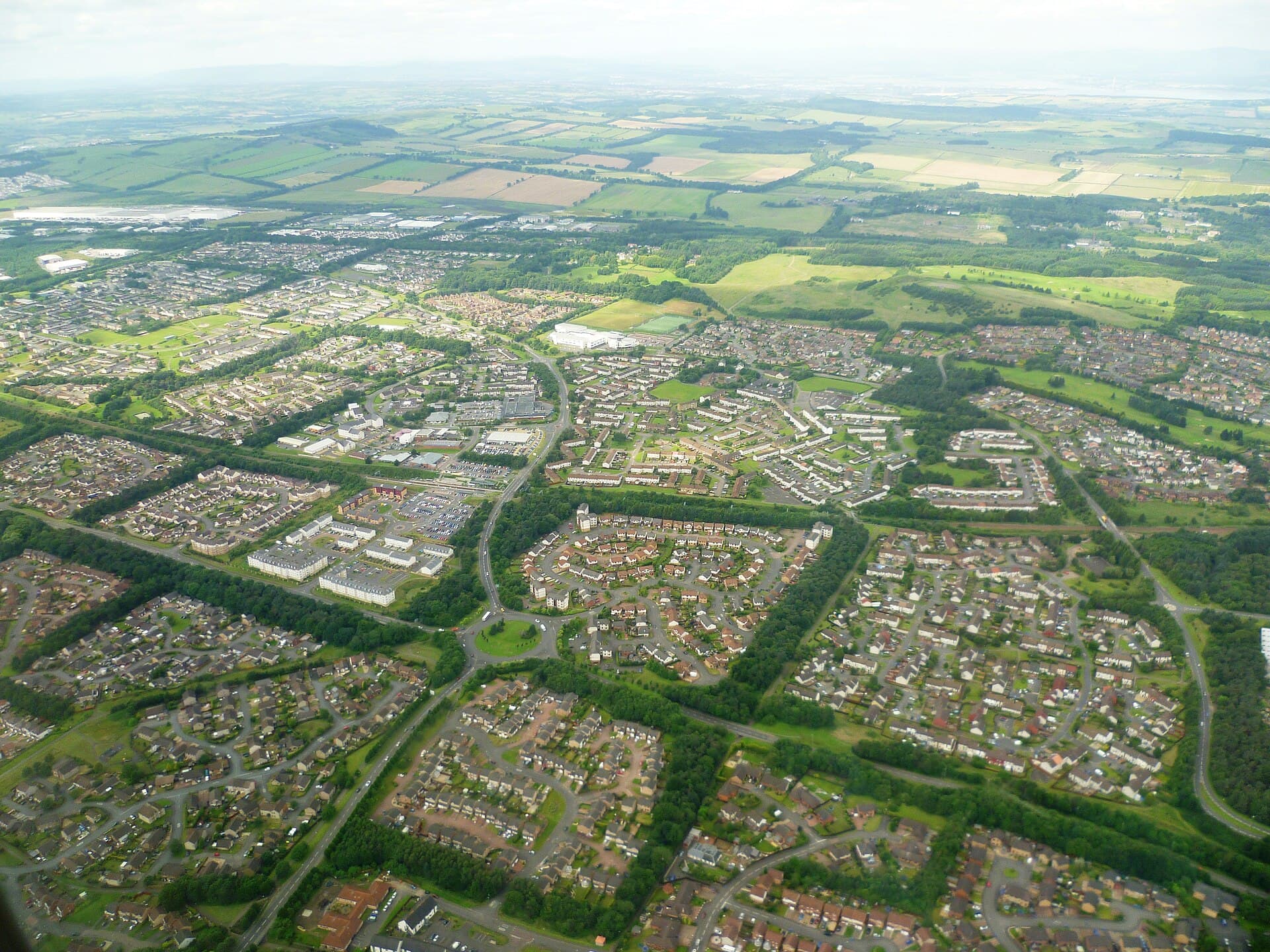
Livingston was practically built around commerce. The Almondvale Shopping Centre, the sprawling McArthurGlen Designer Outlet, and the industrial estates that ring the M8 corridor have made it one of Scotland's most economically active new towns, and behind all that activity sits a significant layer of self-employed tradespeople, contractors, and service workers who keep it running. If you are one of them, whether you fix the units in those retail parks, drive deliveries out of the Kirkton Campus logistics hubs, or run a mobile beauty business across West Lothian, Making Tax Digital for Income Tax is heading your way.
MTD for Income Tax is a UK-wide HMRC reform that adds four quarterly digital updates each year before the annual tax return, which is submitted through the same software. It applies to sole traders and landlords wherever they are in the UK, and Livingston is no exception. The timetable is set, the software requirement is real, and the penalties for missing quarterly deadlines are not trivial.
- MTD for Income Tax
- HMRC's requirement for sole traders and landlords to keep digital records and submit four quarterly updates each year, then the annual tax return, also called the final declaration.
Who in Livingston Actually Needs to Worry About This?
Livingston's economy has a distinctive shape. Alongside the retail and logistics sectors, there is a dense population of construction and fit-out contractors who work across the Central Belt, IT and tech consultants who operate from home in Dedridge or Murieston while serving Edinburgh clients, and a growing number of sole-trader childminders and tutors who serve the town's large family demographic. All of these people are potentially in scope.
The rule is straightforward: if your gross qualifying income (self-employment turnover plus any gross property rental income, before a single penny of expenses) exceeds the relevant threshold, you are in. The thresholds phase in over three years.
| Annual Gross Qualifying Income | MTD Start Date |
|---|---|
| Over £50,000 | 6 April 2026 |
| £30,000 to £50,000 | 6 April 2027 |
| £20,000 to £30,000 | 6 April 2028 |
| Under £20,000 | Not yet mandated |
"Qualifying income" catches people out. A Livingston plumber who charges £48,000 for labour and materials and also rents out a flat for £7,200 a year is over the £50,000 threshold already, and faces the April 2026 deadline, even if after expenses the actual profit is considerably lower. Use our sole trader tax calculator to model your own numbers before you assume you are safely below a threshold.
£50,000
Gross income threshold for April 2026 mandate
4 per year
Quarterly updates, before the annual tax return
£200
Penalty at 4 points, from 2027-28
A Livingston logistics contractor facing the 2026 deadline
Take Connor, a self-employed HGV driver based in the Eliburn area who hauls freight for warehouses along the Eurocentral corridor. His annual invoices come to around £58,000 before fuel and vehicle costs. Under MTD, Connor needs to be filing quarterly from April 2026. Miss a deadline in the 2026 to 2027 tax year and there is no penalty point, though the update is still owed; from 2027-28 each missed deadline earns a point, and four points bring a £200 penalty, then £200 for each further missed deadline. Connor is time-poor and not remotely interested in spreadsheets; he needs a solution that works from his phone between drops, not a desktop accounting package that requires a Sunday afternoon.
The Four Quarterly Deadlines You Need to Know
MTD replaces the 31 January scramble with four rolling deadlines. Each update is cumulative, meaning you are reporting year-to-date income and expenses, not just the most recent quarter. Missing one is not catastrophic in isolation, but the points accumulate, and the £200 penalty per failed submission arrives sooner than most people expect.
| Quarter | Covers | Submission Deadline |
|---|---|---|
| Q1 | 6 Apr to 5 Jul | 7 August |
| Q2 | 6 Apr to 5 Oct | 7 November |
| Q3 | 6 Apr to 5 Jan | 7 February |
| Q4 | 6 Apr to 5 Apr | 7 May |
| Final Declaration | Full year reconciliation | 31 January |
Our complete guide to MTD for sole traders walks through each deadline in detail and explains exactly what information HMRC expects in each update.
Scotland Makes the Tax Calculation Different, Not the Deadline
This matters particularly if you are new to being self-employed in Scotland, or if you have moved here from England and never updated your thinking. Scotland operates its own income tax bands through the Scottish Rate of Income Tax, and your tax code will carry an S prefix. You can check your Scottish tax code if you are unsure what yours currently shows.
Scottish taxpayers face more bands than their counterparts in England, and the higher-rate threshold bites at a lower income level. That means a sole trader in Livingston earning £45,000 profit is likely paying more income tax than an equivalent trader in, say, Chester earning the same amount. MTD does not change the rates or bands; it changes how and when you report. But when you do your final declaration, the tax owed is calculated using Scottish bands, not rest-of-UK ones. If you want to see the difference laid out clearly, the Scottish tax codes guide explains exactly how the S code system works and what it means for your bill.
What Livingston Traders Get Wrong Before They Start
The most common mistake across any local economy is assuming that qualifying income means profit. It does not. Gross turnover counts, before any deductions for materials, mileage, tools, or subcontractors. A Livingston kitchen fitter who buys £15,000 of units and materials and passes the cost to clients is still counting that full invoice value toward their threshold.
The second mistake is leaving software choice too late. MTD requires compatible software recognised by HMRC; a spreadsheet sent by email will not meet the requirement. The recognised products are listed in the MTD software directory. Choosing software in February 2026 for an April 2026 start date means rushing your bank imports, receipt-capture habits, and expense categorisation at the worst possible moment.
The third mistake, particularly common among West Lothian contractors working across multiple clients, is treating the quarterly update as a standalone return. It is cumulative. Your Q3 filing covers the whole period from 6 April to 5 January, not just October to January. If your Q1 figures need amending, that correction flows through into Q2, Q3, and Q4 automatically in a well-designed MTD app.
Filing from Livingston in One Tap
TapTax is HMRC-recognised, with its directory listing pending rather than on that list today. It is a mobile-first MTD app designed for exactly the kind of sole trader the Livingston economy produces: busy, often on the road or on a job site, with no appetite for desktop bookkeeping software. Import your business bank statement by CSV and TapTax brings in your transactions in a couple of minutes. The AI categorisation handles routine expenses. Receipt scanning takes five seconds at a petrol station or trade counter. When a quarterly deadline approaches, your cumulative figures are already sitting there, and filing is a single tap to HMRC.
There is a free plan with no card required, which means you can get your records in order long before you are legally required to file, so when April 2026 arrives you are not scrambling.
“Livingston's sole traders are running businesses, not tax offices. MTD should take minutes a month, not a Sunday afternoon every quarter.”
Getting Ready Before the April 2026 Deadline
If your gross income is above £50,000, you have until 6 April 2026. That sounds comfortable from here, but the practical preparation: choosing compliant software, registering with HMRC for MTD, importing your bank statements, and building a habit of monthly categorisation, takes longer than a single weekend. The best time to start is now, not in March 2026.
If you are between £20,000 and £50,000, you have slightly more runway, but the same logic applies. The traders who will find MTD painless are the ones who sorted their digital record-keeping a year early, not the ones who signed up for software the week before their first quarterly deadline.
Start with our sole trader tax calculator to confirm where you sit relative to the thresholds. Then download TapTax, import your bank statement, and let the app do the heavy lifting while you get on with your actual work.
People also ask
Do I need an accountant in Livingston to comply with Making Tax Digital?
No, you do not need an accountant. MTD requires HMRC-recognised software and four quarterly digital updates, but a sole trader in Livingston can manage this entirely through a mobile app like TapTax without professional help. An accountant can still add value for tax planning, especially given Scotland's more complex income tax bands, but compliance itself does not require one.
Does MTD for Income Tax apply in Scotland the same as in England?
Yes. The MTD timetable, income thresholds, quarterly deadlines, and software requirements are UK-wide and identical. The only difference is that Scottish taxpayers pay income tax at Scottish rates and bands, which are set by the Scottish Government and differ from the rest of the UK. Your tax code will carry an S prefix rather than a standard code.
What counts as qualifying income for MTD in Livingston?
Qualifying income is your gross self-employment turnover plus any gross property rental income, both measured before expenses. If the combined total exceeds the relevant threshold (£50,000, £30,000, or £20,000 depending on the year), you must comply. Expenses, materials, and subcontractor costs do not reduce the figure used to determine whether you are in scope.
What happens if I miss a quarterly MTD deadline?
HMRC operates a points-based penalty system. Each missed quarterly submission earns a penalty point, and once you reach the threshold for your filing frequency, financial penalties of £200 or more apply. Points can also accumulate from late final declarations. Keeping compliant software set up and connected means the risk of missing a deadline is very low.
Making Tax Digital for sole traders and landlords in Livingston
If you are a sole trader or landlord in Livingston, Making Tax Digital for Income Tax applies to you from 6 April 2026 if your qualifying income is over £50,000, and from 6 April 2027 if it is over £30,000. TapTax keeps your digital records and sends your quarterly updates to HMRC, and it is HMRC-recognised.
Start freeQuarterly expenses under MTD: the £90,000 rule
If your annual business turnover is £90,000 or less, HMRC lets you report a single consolidated expenses total in each Making Tax Digital quarterly update instead of breaking expenses down into itemised categories. Most sole traders in Livingston are under this threshold, so a quarterly update can be as simple as two figures: total income and total expenses. You still need to keep digital records of each individual expense - the relaxation only changes how much detail goes into the quarterly update itself.
Related guides and calculators
Signing up for Making Tax Digital
MTD guides for nearby areas
Frequently asked questions
Do Livingston sole traders need to register separately for Making Tax Digital?
Yes. When the time comes, you need to sign up for MTD for Income Tax through HMRC's online service, separately from your existing Self Assessment registration. You will also need to ensure your chosen software is HMRC-recognised and connected to your account before your first quarterly deadline. It is worth doing this well in advance of April 2026 if you are above the £50,000 threshold.
I am a Scottish taxpayer in Livingston. Does MTD change the tax rates I pay?
No. MTD for Income Tax changes how and when you report your income, not the rates at which it is taxed. Scottish taxpayers continue to pay income tax at Scottish rates and bands, which are set separately from the rest of the UK and include additional bands such as the starter, intermediate, advanced, and top rates. Your S-prefixed tax code remains in place.
Can I use a spreadsheet to comply with MTD for Income Tax?
Not on its own. HMRC requires HMRC-recognised, compatible software to submit quarterly updates. A standard spreadsheet does not meet this requirement unless it uses a bridging software solution specifically approved for MTD. Using a dedicated MTD app from the outset is simpler and far less prone to error than bridging arrangements.
What is the difference between a quarterly update and the final declaration?
Quarterly updates report your cumulative year-to-date income and expenses to HMRC four times a year; they are not a tax payment or a full reconciliation. The final declaration, due by 31 January after the tax year ends, is where you confirm your total income, claim any reliefs, and finalise the tax you owe. The four quarterly updates replace the old annual return but do not replace the final declaration entirely.
What if my Livingston business income fluctuates and I am not sure whether I will exceed the threshold?
HMRC determines whether you are in scope based on your qualifying income in a previous tax year, so if you exceeded the threshold last year you will typically be mandated from the relevant April date. If your income fluctuates around a threshold, it is worth using a tax calculator to estimate your position early. If you voluntarily sign up for MTD before you are mandated, you can also use it to build good habits ahead of any legal requirement.
Sources
Official guidance on GOV.UK.