
Making Tax Digital in
Hemel Hempstead
Making Tax Digital is coming for sole traders in Hemel Hempstead, whether you work the Magic Roundabout every morning or run your trade from the Maylands industrial estate.
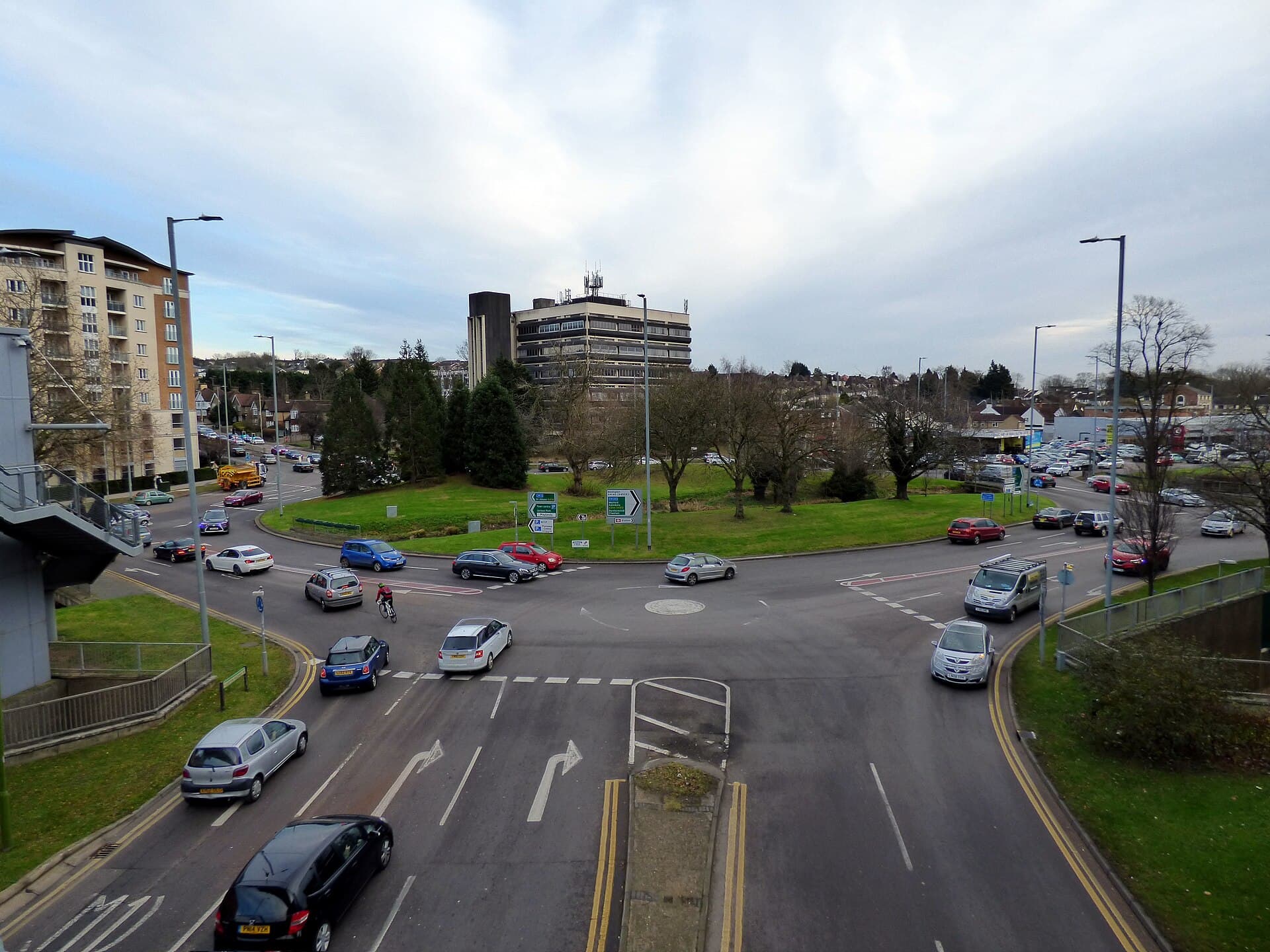
Hemel Hempstead is quietly one of Hertfordshire's busiest working towns: a postwar new-town grid of business parks, distribution hubs, and retail units that together support thousands of sole traders, from couriers threading the A414 to IT contractors commuting into the City on the Overground, and independent tradespeople whose vans are parked outside semi-detacheds from Adeyfield to Apsley before most people have finished their coffee. If any of that sounds like your working week, Making Tax Digital for Income Tax (MTD for IT) will change how you report your earnings to HMRC, and the clock is already running.
- MTD for Income Tax
- HMRC's requirement for digital records and four quarterly updates for sole traders and landlords, alongside the annual tax return from April 2026.
MTD for Income Tax is a UK-wide change, so the thresholds and deadlines below apply to every sole trader in England, including everyone operating in Hemel Hempstead. What matters locally is knowing which phase affects you, and giving yourself enough runway to get comfortable with quarterly filing before the first deadline lands.
Which Hemel Hempstead Sole Traders Are Affected First?
Hemel Hempstead has a particularly large concentration of logistics and distribution businesses around Maylands Avenue and the Buncefield area, and many of the self-employed workers who service those businesses, including HGV owner-operators, warehouse fit-out contractors, and the electricians and plumbers who keep commercial units running, turn over well above £50,000 a year on paper even when margins are tight. Gross qualifying income is what HMRC counts, not profit, so a sole-trader electrician billing £60,000 and spending £20,000 on parts and a van still counts as a £60,000 qualifying-income trader for MTD purposes.
For a clear picture of who enters the system and when, the table below lays out the three phases:
| Qualifying gross income | Mandated from |
|---|---|
| Over £50,000 | 6 April 2026 |
| £30,000 to £50,000 | 6 April 2027 |
| £20,000 to £30,000 | 6 April 2028 |
| Under £20,000 | Not yet mandated |
If you are unsure whether your income sits above or below a threshold, a quick run through the sole trader tax calculator will give you a working estimate based on your turnover and expenses, which you can then check against your last Self Assessment return.
If you are a Hemel Hempstead IT contractor billing £58,000 a year
Suppose you are a freelance network engineer based in Hemel Hempstead, operating through a sole-trader arrangement rather than a limited company, and billing a couple of clients in the London commuter corridor for around £58,000 gross. You are in scope from 6 April 2026. That means your first quarterly update covers 6 April to 5 July 2026 and must be submitted by 7 August 2026. You do not need to wait until January anymore, but you also no longer face one enormous annual crunch. Reach 4 points and HMRC charges a £200 penalty, then £200 for each further missed deadline.
£50,000
Gross income threshold for April 2026 mandate
4 per year
Quarterly updates required under MTD
£200
Penalty once points threshold is reached
The Four Quarterly Deadlines: What Hemel Hempstead Traders Need to Diary
One of the most common points of confusion is that each quarterly update is cumulative, not a snapshot of just the latest three months. You are submitting a year-to-date position, so the figures build up with each submission. For the full explanation of how quarterly updates work under Making Tax Digital, including what happens if you need to correct a figure, that guide covers the mechanics in plain English.
Here are the four standard periods and their filing deadlines:
| Quarter | Period | Deadline |
|---|---|---|
| Q1 | 6 April to 5 July | 7 August |
| Q2 | 6 April to 5 October (cumulative) | 7 November |
| Q3 | 6 April to 5 January (cumulative) | 7 February |
| Q4 | 6 April to 5 April (cumulative) | 7 May |
| Final declaration | Full year | 31 January |
For sole traders in Hemel Hempstead who already juggle early-morning runs to Maylands or back-to-back appointments across the Dacorum area, four deadlines instead of one sounds like more work. In practice, if your records are kept digitally and up to date, each submission can take a matter of minutes.
The Mistake That Catches Hemel Hempstead Tradespeople Out
The postwar new-town layout of Hemel Hempstead means a lot of self-employed tradespeople cover a broad patch: a sole-trader builder might have jobs in Hemel itself, across to Berkhamsted, down to St Albans, and occasionally into North London. That means a lot of small receipts, fuel costs, and material invoices across the year. The classic error is keeping expenses in a shoebox (or a scattered collection of email attachments) and trying to reconstruct the year every January. Under MTD, that approach collides with four annual deadlines instead of one, and the cumulative nature of the updates means an error in Q1 ripples through every submission that follows.
The fix is straightforward: import your business bank statements into MTD-compatible software that categorises them with AI assistance, and lets you photograph receipts on site rather than hunting for them later. That is precisely what TapTax is built to do, and it works from the same phone you already use to quote jobs and invoice clients.
Checking Your Tax Code and Getting Your Numbers Right
Before MTD even enters the picture, it is worth making sure HMRC has you on the right tax code. England-based sole traders typically have a code in the format 1257L, reflecting the standard Personal Allowance of £12,570. If yours looks different, perhaps because of an adjustment for an underpayment in a previous year, it is worth resolving before you start filing quarterly updates. Use the tax code checker to confirm yours is correct so that your quarterly figures land on an accurate baseline.
For most sole traders in Hemel Hempstead with a single source of self-employment income, the standard 1257L code applies: the first £12,570 of profit is tax-free, the next slice to £50,270 is taxed at 20%, and profits above that attract 40% under the higher rate. MTD does not change those rates; it only changes how and when you report the income that determines which band you sit in.
Getting Ready in Hemel Hempstead: The Practical Starting Point
The one action worth taking right now, regardless of which phase applies to you, is switching to digital record-keeping. HMRC requires MTD-compatible software for all qualifying submissions, and the sooner your bookkeeping lives in that software, the smoother your first quarterly update will be. TapTax is free to start, requires no credit card, and is designed specifically for sole traders who would rather spend their evening doing anything other than spreadsheet admin.
If April 2026 feels close, that is because it is. A Hemel Hempstead contractor earning above £50,000 who starts using TapTax today has months to build the habit of scanning receipts and reviewing categorised transactions before the first real deadline in August 2026. A contractor who waits until March 2026 is setting themselves up for a stressful first summer.
“Hemel Hempstead's working culture is built on getting things done efficiently. MTD is simply the next thing to get sorted.”
People also ask
Does Making Tax Digital apply to sole traders in Hemel Hempstead?
Yes. MTD for Income Tax is a UK-wide requirement. Sole traders based in Hemel Hempstead with qualifying gross income above £50,000 must comply from 6 April 2026. The £30,000 threshold follows in April 2027, and £20,000 in April 2028. Being in Hertfordshire rather than a major city makes no difference to the mandate.
What counts as qualifying income for MTD purposes?
Qualifying income is your gross self-employment turnover plus any gross property income, both measured before expenses. If you invoice £55,000 and spend £15,000 on materials, your qualifying income is £55,000. This catches some sole traders off guard when comparing to their net profit figure.
What happens if I miss a quarterly MTD deadline?
HMRC operates a points-based system. Each missed deadline earns a penalty point, and once you reach the threshold for your filing frequency (four quarterly updates means a threshold of four points), a £200 financial penalty is charged. Points expire after two years of full compliance.
Can I use my existing spreadsheet to comply with MTD?
Only if it connects to HMRC via bridging software recognised by HMRC, which you can find on HMRC's find-MTD-software service. A standalone spreadsheet with no digital submission link does not meet the MTD requirement. Most sole traders find it simpler to move to a dedicated MTD-compatible app that handles the filing directly. TapTax is one, though it is not on HMRC's list yet: it is MTD-compatible with its directory listing still pending.
Making Tax Digital for sole traders and landlords in Hemel Hempstead
If you are a sole trader or landlord in Hemel Hempstead, Making Tax Digital for Income Tax applies to you from 6 April 2026 if your qualifying income is over £50,000, and from 6 April 2027 if it is over £30,000. TapTax keeps your digital records and sends your quarterly updates to HMRC, and it is HMRC-recognised.
Start freeQuarterly expenses under MTD: the £90,000 rule
If your annual business turnover is £90,000 or less, HMRC lets you report a single consolidated expenses total in each Making Tax Digital quarterly update instead of breaking expenses down into itemised categories. Most sole traders in Hemel Hempstead are under this threshold, so a quarterly update can be as simple as two figures: total income and total expenses. You still need to keep digital records of each individual expense - the relaxation only changes how much detail goes into the quarterly update itself.
Related guides and calculators
Signing up for Making Tax Digital
MTD guides for nearby areas
Frequently asked questions
Do I need an accountant in Hemel Hempstead for Making Tax Digital?
No, you do not need a local accountant solely to comply with MTD. The requirement is for HMRC-recognised software that submits quarterly updates digitally; you can do this yourself using an app such as TapTax. Many sole traders in Hemel Hempstead choose to retain an accountant for broader tax planning, but the quarterly filing itself does not legally require one.
When does Making Tax Digital start for a Hemel Hempstead sole trader earning £35,000 a year?
A sole trader with qualifying gross income between £30,000 and £50,000 enters the MTD regime from 6 April 2027. It is worth starting digital record-keeping before that date so the transition is smooth rather than rushed. Income under £20,000 has no mandated start date yet.
Are the MTD deadlines the same across England?
Yes. The quarterly update periods and submission deadlines are set by HMRC and apply equally to every sole trader in England, including those in Hemel Hempstead. The four deadlines are 7 August, 7 November, 7 February, and 7 May, with a final declaration due by 31 January.
What tax code should a sole trader in Hemel Hempstead expect?
Most sole traders in England operating with a single income source will have the standard code 1257L, reflecting the Personal Allowance of £12,570. If HMRC has adjusted your code for a previous underpayment or another reason, it will differ. You can verify yours using the TapTax tax code checker and contact HMRC to correct any errors before quarterly filing begins.
Does MTD change how much tax I pay in Hemel Hempstead?
No. MTD changes how and when you report your income, not the tax rates or bands themselves. England's rates remain 20% basic, 40% higher, and 45% additional rate. You may find that filing quarterly gives you better visibility of your tax liability throughout the year, which can help with budgeting, but the underlying calculation is unchanged.
Sources
Official guidance on GOV.UK.