
Making Tax Digital in
Hastings
From the Old Town fishermen's net shops to the creative quarter on the seafront, Hastings sole traders need to know exactly when Making Tax Digital lands for them.
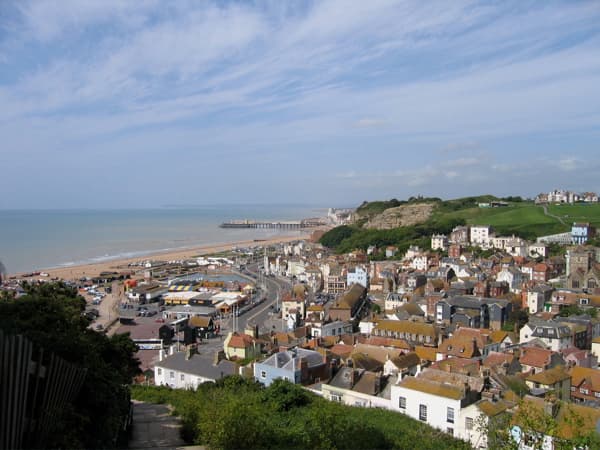
Hastings has quietly built one of the most distinctive self-employed economies on the south-east coast. The Old Town's independent galleries, the vintage and antique dealers along the America Ground, the surf-school instructors on the shingle, the self-employed fishermen still hauling nets on the Stade: this is a town that runs on sole traders. And from April 2026, many of them face the biggest change to how income tax is reported since Self Assessment launched in the 1990s.
Making Tax Digital for Income Tax (MTD for IT) requires anyone with qualifying income above certain thresholds to keep digital records and submit four quarterly updates to HMRC every year, alongside the annual tax return. It applies whether you run a beach-hut café, a property portfolio in the St Leonards conservation area, or a freelance photography business that shoots the derelict pier for editorial clients. If you earn above the threshold, Hastings is not exempt.
- MTD for Income Tax
- HMRC's requirement for sole traders and landlords to keep digital records and submit four cumulative quarterly updates each tax year, alongside the annual tax return.
Who in Hastings Is Actually Affected, and When?
The rule of thumb is simple: look at your gross income, not your profit. If your annual turnover from self-employment and any rental income combined crosses a threshold, you are in. The phased timetable is set nationally and looks like this:
| Qualifying gross income | MTD start date |
|---|---|
| Over £50,000 | 6 April 2026 |
| £30,000 to £50,000 | 6 April 2027 |
| £20,000 to £30,000 | 6 April 2028 |
| Under £20,000 | Not yet mandated |
In Hastings this catches a broader group than many people expect. The town has seen a significant influx of creative and digital freelancers over the past decade, drawn by lower property costs and good rail connections to London. A graphic designer contracting for London agencies from a studio in the Jerwood Quarter, pulling in £55,000 gross, is in from day one. So is a self-employed builder whose renovation work across the Rother valley adds up to £52,000 in invoices, even if the margins are tight.
Property income also counts. If you let a flat on Harold Place while doing any amount of self-employed work, both income streams are combined for the threshold test. Given Hastings's growing short-let and holiday-let market, plenty of people who think of themselves as "just a landlord" are actually crossing £50,000 when their trade income is included.
For a full picture of what you owe under different income scenarios, the TapTax sole trader tax calculator will run the numbers in under two minutes.
If you are a Hastings surf instructor and holiday-let host earning £53,000
Say you take £34,000 from surf lessons and equipment hire between Easter and October, and your flat on the seafront generates £19,000 in short-let income over the year. Combined, that is £53,000 in qualifying gross income. You fall into the April 2026 cohort, not 2027. You have less than a year to find compliant software, open a digital record-keeping system, and file your first quarterly update by 7 August 2026. Acting now, not in March, is the only comfortable path.
The Four Quarterly Deadlines You Cannot Miss
One of the sharpest practical changes under MTD is the shift from one annual deadline, 31 January, to four in-year updates plus a final declaration. Each update is cumulative, meaning it covers the year to date rather than just the most recent three months, so your figures build on each quarter.
| Quarter | Period | Submission deadline |
|---|---|---|
| Q1 | 6 April to 5 July | 7 August |
| Q2 | 6 April to 5 October | 7 November |
| Q3 | 6 April to 5 January | 7 February |
| Q4 | 6 April to 5 April | 7 May |
| Final declaration | Full year sign-off | 31 January |
HMRC uses a points-based penalty system. Miss a deadline and you accumulate a point. Reach 4 points and HMRC charges a £200 penalty, then £200 for each further missed deadline. Miss the next one and you are back in the danger zone immediately. For a seasonal business, the Q1 deadline on 7 August falls right in the middle of peak trading, which is precisely when a Hastings beach trader or ice cream vendor is least likely to be thinking about tax admin.
£50,000
Gross income threshold for April 2026 start
£200
Penalty once points threshold is reached
4 + 1
Quarterly updates plus final declaration each year
What Hastings Sole Traders Tend to Get Wrong
The most common misunderstanding in seasonal and arts-economy towns like Hastings is conflating profit with qualifying income. A printmaker selling at the Hastings Seafront Artisan Market might gross £38,000 a year but spend £14,000 on materials, studio rent at the Rock-a-Nore studios, and market pitch fees. Her taxable profit is £24,000, well within basic rate. But her qualifying income for MTD threshold purposes is the £38,000 gross, which puts her into the 2028 cohort already.
The second pitfall is assuming a tax code letter tells you where you stand. If your sole source of income is self-employment, you may not have a PAYE tax code at all, but if you also pick up some employed shifts at one of the town's hotels or hospitality venues, you will have a code and it is worth checking it is correct. You can check your tax code quickly to make sure HMRC is not applying an adjustment that distorts how much you owe. England tax codes typically look like 1257L, reflecting the £12,570 Personal Allowance and basic rate of 20% to £50,270.
The third mistake is waiting until the tax year when MTD applies to you before setting up digital record-keeping. Getting your bookkeeping into shape takes weeks, not hours, especially if your current system is a shoebox of receipts and a bank statement you look at once in January.
For a plain-English walkthrough of the whole system, the MTD for sole traders guide on the TapTax blog covers every moving part without the HMRC jargon.
Filing From Hastings in Under a Minute
TapTax is a mobile-first app designed around the way sole traders actually work, whether that is on the beach, on a building site in Ore, or in a pop-up studio during the Hastings Fringe. Import your business bank statement by CSV and the app brings in your transactions in a couple of minutes. AI categorisation handles the bulk of your bookkeeping, flagging anything it is not certain about for a quick review. When a quarterly deadline approaches, you tap once to submit your cumulative update directly to HMRC via the MTD API.
There is a free plan that requires no card. You do not need an accountant to get started, though TapTax integrates smoothly with one if you already use local bookkeeping services.
“In a town where the creative economy runs on sole traders, MTD should not be another reason to dread January. Four taps a year, and you are done.”
Getting Ready Before the Deadline Finds You
The most important step is to work out which wave you are in. Add your gross self-employment turnover and any gross property income for the last full tax year, before deducting a single expense. If that number is above £50,000, April 2026 is your deadline. If it sits between £30,000 and £50,000, you have until April 2027, but that is still less than two years away.
Once you know your cohort, the practical checklist is short: choose HMRC-recognised software (TapTax qualifies), separate your business and personal spending if you have not already, and make a note of your four submission dates for the first year. That is it. The complexity lives inside the software, not in your diary.
Hastings has survived fishing downturns, seaside-town decline, and a creative renaissance all in the same postcode. A quarterly tax update is not going to be what beats you. But leaving it until the April before your start date might.
People also ask
Do sole traders in Hastings have to sign up for Making Tax Digital?
Yes, if your gross qualifying income, self-employment turnover plus any rental income, exceeds £50,000 you must comply from 6 April 2026. The £30,000 threshold follows in 2027 and £20,000 in 2028. There is no local opt-out; the rules are the same across England.
Does seasonal income affect when I join MTD?
HMRC looks at your total qualifying gross income across the full tax year, not month by month. A Hastings business that earns most of its money in summer still counts every pound of annual turnover toward the threshold, so a seasonal sole trader can easily clear £50,000 even if winter trade is quiet.
What counts as qualifying income for MTD purposes?
Qualifying income is your gross self-employment turnover plus gross property rental income, both measured before any expenses are deducted. It is not your profit. If you run a market stall and also let a room on Airbnb, both streams count together toward the threshold.
Can I still use a spreadsheet under MTD?
Not on its own. You need HMRC-recognised software that can submit quarterly updates digitally via the MTD API. Some accountants use bridging software with spreadsheets, but a purpose-built app like TapTax is simpler and removes the risk of a formatting error causing a failed submission.
Making Tax Digital for sole traders and landlords in Hastings
If you are a sole trader or landlord in Hastings, Making Tax Digital for Income Tax applies to you from 6 April 2026 if your qualifying income is over £50,000, and from 6 April 2027 if it is over £30,000. TapTax keeps your digital records and sends your quarterly updates to HMRC, and it is HMRC-recognised.
Start freeQuarterly expenses under MTD: the £90,000 rule
If your annual business turnover is £90,000 or less, HMRC lets you report a single consolidated expenses total in each Making Tax Digital quarterly update instead of breaking expenses down into itemised categories. Most sole traders in Hastings are under this threshold, so a quarterly update can be as simple as two figures: total income and total expenses. You still need to keep digital records of each individual expense - the relaxation only changes how much detail goes into the quarterly update itself.
Related guides and calculators
Signing up for Making Tax Digital
MTD guides for nearby areas
Frequently asked questions
Do I need an accountant in Hastings to comply with Making Tax Digital?
No, an accountant is not legally required. You need HMRC-recognised software that can submit quarterly updates, and TapTax is one such option with a free plan. That said, many Hastings sole traders with complex income from multiple trades or property do find a local bookkeeper useful, and TapTax integrates with accountants if you already have one.
I earn most of my money in summer from the seafront. Do I still have to file four quarterly updates?
Yes. The quarterly filing schedule is fixed by HMRC and applies to all mandated sole traders regardless of when in the year the income arrives. Your Q1 update covering April to July is due by 7 August, which falls in peak season for many coastal traders, so setting up automated software well in advance is especially important.
If my Hastings holiday let and my self-employed trade each earn under £20,000, am I affected?
Possibly. HMRC combines self-employment income and property income to determine your qualifying income total. Two streams of £18,000 each add up to £36,000, which puts you in the April 2027 cohort. Always add both figures together before concluding you are below the threshold.
What penalty will I face if I miss a quarterly MTD deadline?
HMRC operates a points-based system. Reach 4 points and HMRC charges a £200 penalty, then £200 for each further missed deadline.
Is the MTD start date the same for everyone in England, or does it vary by region?
The start dates are set nationally and are identical across England. There is no regional variation. Whether you are based in Hastings, London, or Newcastle, the thresholds and deadlines are £50,000 from April 2026, £30,000 from April 2027, and £20,000 from April 2028.
Sources
Official guidance on GOV.UK.