
Making Tax Digital in
Glasgow
From the Merchant City to Maryhill, Glasgow's self-employed need to know exactly when Making Tax Digital kicks in and what it means for their business.
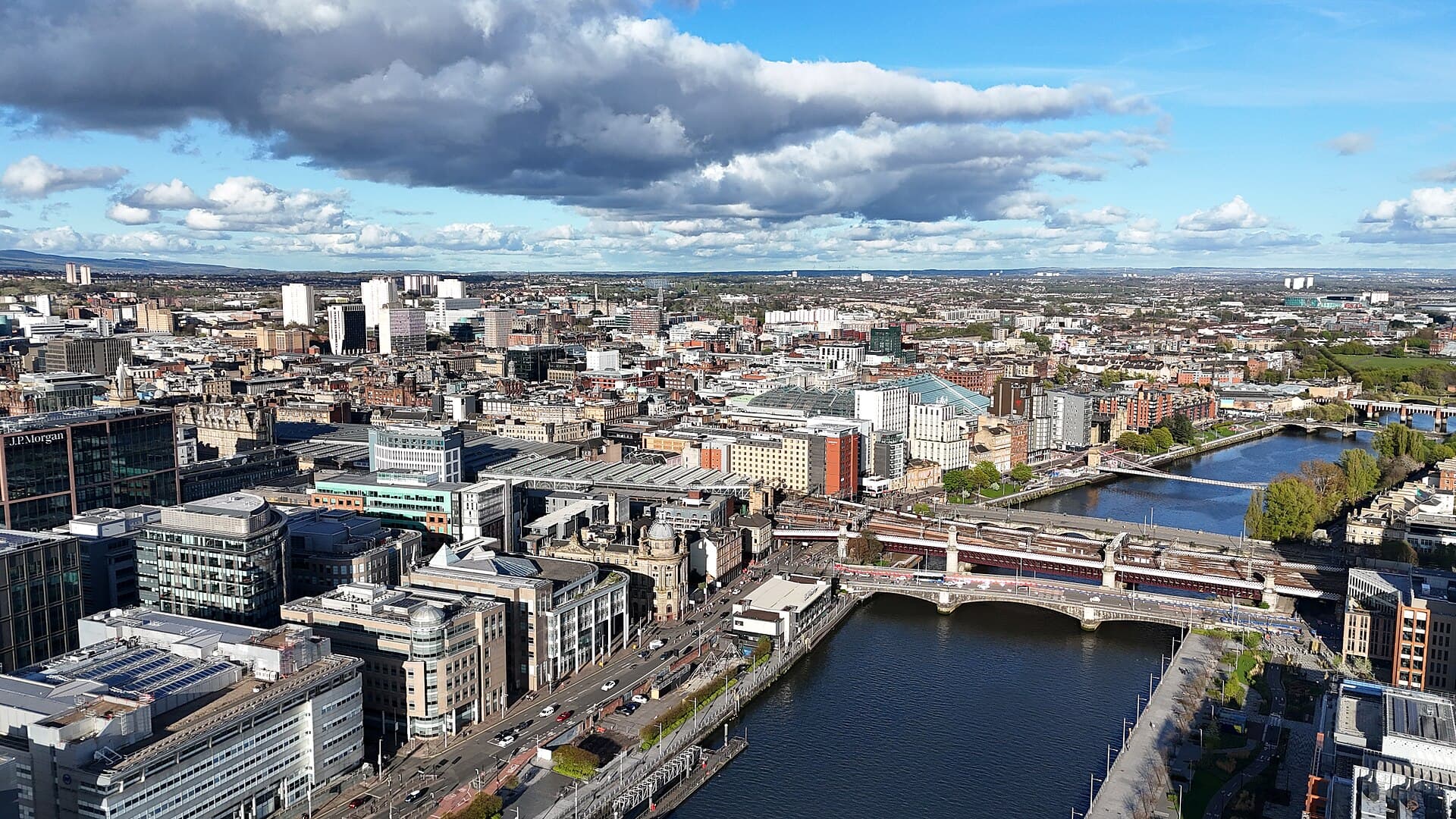
Glasgow runs on self-employment. The city that rebuilt itself through creative industries, hospitality, construction, and a famously tenacious entrepreneurial spirit has more sole traders per head than many people realise: from the joiners and electricians working the steady flow of West End tenement renovations to the freelance designers clustered around the Trongate studios, the personal trainers operating out of Southside gyms, and the market traders packing up their stalls at the Barras on a Sunday afternoon. If any of them earn more than £20,000 a year from self-employment or property, a significant change to how they report income to HMRC is on its way.
Making Tax Digital for Income Tax (MTD for IT) replaces the familiar, once-a-year Self Assessment return with a system of four quarterly digital updates plus a final declaration. It is not a change to what you owe; it is a change to how and how often you tell HMRC what you have earned. Every sole trader in Glasgow is subject to the same UK-wide timetable, regardless of whether you file from a Finnieston flat or a Govan workshop.
- MTD for Income Tax
- HMRC's requirement for digital records and four quarterly updates for sole traders and landlords, alongside the annual tax return from April 2026.
£50,000
Gross income threshold for April 2026 compliance
£200
Penalty at 4 points, from 2027-28
4
Quarterly updates per year, before the tax return
When Does MTD for Income Tax Start in Glasgow?
The rollout is staggered by income level. HMRC measures your "qualifying income" as your gross self-employment turnover plus any gross property income, before you deduct a single expense. That figure, not your profit, determines when you must comply.
| Qualifying gross income | MTD start date |
|---|---|
| Over £50,000 | 6 April 2026 |
| £30,000 to £50,000 | 6 April 2027 |
| £20,000 to £30,000 | 6 April 2028 |
| Under £20,000 | Not yet mandated |
If you are already close to one of those thresholds, the clock is ticking. A Glasgow sole trader turning over £48,000 today could easily cross the £50,000 line before April 2026 simply through a modest price increase or a good run of new clients. It is worth using a sole trader tax calculator now to stress-test where your qualifying income sits, because once you are in scope you cannot opt out.
Who Does This Actually Affect in Glasgow?
Think about the city's dominant self-employed trades. Glasgow is one of the UK's busiest cities for hospitality; its restaurant and bar scene has been one of the few consistently growing corners of the Scottish economy. A head chef who went sole trader, or a freelance events manager covering the SEC and Hydro circuit, can easily reach £50,000 in gross bookings while their net profit is considerably lower. Gross turnover is what counts for the threshold, not what ends up in your pocket after materials, travel, or kitchen costs.
Construction and trades are equally prominent. The tenement stock across the West End, Shawlands, and Dennistoun generates relentless demand for plasterers, plumbers, and electricians. Many of these tradespeople operate as sole traders because the setup cost is low and the work is consistent. If that describes you, MTD is not a distant concern.
Then there is Glasgow's substantial gig-economy and creative sector: freelance developers, UX designers, tattoo artists, music tutors, and couriers who pick up work between the city centre and the suburbs. For many, the gap between their gross invoices and net earnings is significant, which means they may have assumed they are below the threshold when in fact they are not.
A Glasgow Scenario: Roisin the Electrician
Roisin is a sole trader electrician based in Pollokshields. Her gross turnover for 2024-25 is £58,000. Her actual profit after materials and van costs is around £36,000, which, under Scotland's income tax bands, means she faces a steeper effective rate than an equivalent earner in England because the Scottish intermediate and higher rates bite earlier. To understand exactly what her S-prefixed tax code means for her bill, she checks her Scottish tax code explanation. Roisin must comply with MTD from 6 April 2026. She needs to file her first quarterly update for Q1 (6 April to 5 July 2026) by 7 August 2026. Missing that single deadline earns her one penalty point; accumulate enough points and the £200 fine lands automatically.
The Four Quarterly Deadlines You Cannot Afford to Miss
One of the most important things to understand about MTD is that each quarterly update is cumulative. You are not just reporting the last three months; you are reporting your income and expenses year-to-date. That means early errors compound, and a sloppy Q1 makes every subsequent filing harder.
| Quarter | Period covered | Filing deadline |
|---|---|---|
| Q1 | 6 April to 5 July | 7 August |
| Q2 | 6 April to 5 October | 7 November |
| Q3 | 6 April to 5 January | 7 February |
| Q4 | 6 April to 5 April | 7 May |
| Final declaration | Full year | 31 January |
For a practical walkthrough of how the quarterly cycle works, the MTD for sole traders guide covers the mechanics in plain language, including what counts as an allowable expense and how the final declaration differs from your old Self Assessment return.
What Glasgow Sole Traders Get Wrong About MTD
The most common misunderstanding is conflating profit with qualifying income. A Glasgow market trader at the Barras who turns over £55,000 but spends £25,000 on stock thinks she is below the £50,000 threshold. She is not. Gross turnover is the figure that matters.
The second is the Scotland tax-rate assumption. Because MTD itself is identical across the UK, some Scottish sole traders assume their whole tax position mirrors what they read in English-language guides. It does not. Scotland has six income tax bands, and the higher rate of 42% currently kicks in at a lower threshold than in England. If you are unsure whether your tax code starts with S and what that costs you in practice, checking your Scottish tax code before you start quarterly filing will save you a nasty surprise at the final declaration stage.
The third mistake is leaving software selection too late. MTD requires HMRC-recognised software; a spreadsheet is not enough on its own. Choosing and connecting your software well before your start date means your transaction history is clean, your categories are set, and you are not scrambling the night before your first deadline.
Filing From Glasgow in One Tap
TapTax is built for exactly the kind of time-poor sole trader that Glasgow produces in abundance. Upload your business bank statement as a CSV and it brings in every transaction in a couple of minutes. AI categorisation handles the bulk of your expenses, and the receipt scanner covers the rest. When a quarterly deadline approaches, you review a summary and file directly with HMRC in one tap. There is a free plan with no card required, so you can set it up today without committing to anything.
Glasgow's self-employed community has always found ways to get things done efficiently. MTD is just the latest administrative hurdle, and with the right tool it is genuinely a small one.
“MTD is not about paying more tax; it is about reporting it more often. Get organised once and the quarterly filings take minutes.”
Getting Ready Before April 2026
If your qualifying income is above £50,000, you have less than a year to prepare. If you are approaching £30,000, 2027 will arrive quickly. The practical steps are the same regardless of your income band: work out your qualifying income accurately, understand your Scottish tax position, choose compliant software, and start keeping digital records now so the transition feels effortless rather than sudden.
The city's trades, creatives, and gig workers have faced bigger upheavals than a quarterly filing deadline. A little preparation now means the April 2026 start date is a non-event rather than a crisis.
People also ask
Is Making Tax Digital compulsory for sole traders in Glasgow?
Yes. MTD for Income Tax is a UK-wide requirement and applies equally to sole traders in Glasgow. If your qualifying gross income from self-employment or property exceeds £50,000, you must comply from 6 April 2026. Lower thresholds of £30,000 and £20,000 follow in April 2027 and April 2028 respectively.
Does Scotland have different MTD rules or deadlines?
No. The MTD timetable, income thresholds, and quarterly deadlines are identical across the whole of the UK. What differs in Scotland is the income tax you owe on your profits: Scottish taxpayers have S-prefixed tax codes and pay tax under Scotland's own bands and rates, which can result in a higher bill at a given profit level than in England.
What counts as qualifying income for MTD purposes?
Qualifying income is your gross self-employment turnover plus any gross property income, before you deduct expenses. It is not your profit. A Glasgow tradesperson turning over £55,000 and making a £30,000 profit is still above the £50,000 threshold and must comply from April 2026.
What happens if I miss a quarterly MTD deadline?
HMRC operates a points-based penalty system. Each missed quarterly deadline earns you a penalty point, and once you reach the threshold for your filing frequency, a £200 fine is issued automatically. Further missed deadlines can lead to larger penalties, so setting calendar reminders or using software that prompts you before each due date is strongly advisable.
Making Tax Digital for sole traders and landlords in Glasgow
If you are a sole trader or landlord in Glasgow, Making Tax Digital for Income Tax applies to you from 6 April 2026 if your qualifying income is over £50,000, and from 6 April 2027 if it is over £30,000. TapTax keeps your digital records and sends your quarterly updates to HMRC, and it is HMRC-recognised.
Start freeQuarterly expenses under MTD: the £90,000 rule
If your annual business turnover is £90,000 or less, HMRC lets you report a single consolidated expenses total in each Making Tax Digital quarterly update instead of breaking expenses down into itemised categories. Most sole traders in Glasgow are under this threshold, so a quarterly update can be as simple as two figures: total income and total expenses. You still need to keep digital records of each individual expense - the relaxation only changes how much detail goes into the quarterly update itself.
Related guides and calculators
Signing up for Making Tax Digital
MTD guides for nearby areas
Frequently asked questions
Do I need an accountant in Glasgow to comply with Making Tax Digital?
You do not need an accountant, but you do need HMRC-recognised MTD-compatible software. Many Glasgow sole traders are handling MTD themselves using mobile-first apps like TapTax that import bank statements, categorise expenses automatically, and file quarterly updates directly with HMRC. TapTax is HMRC-recognised. An accountant can still be valuable for tax planning, particularly given Scotland's distinct income tax bands, but the filing itself does not require one.
I am a Glasgow landlord as well as a sole trader. Does MTD apply to my rental income?
Yes. HMRC adds your gross self-employment income and your gross property income together to calculate your qualifying income. If the combined total exceeds the relevant threshold, you must comply with MTD. Both income streams will need to be reported through MTD-compatible software from your start date.
My gross turnover is above £50,000 but my profit is much lower after expenses. Do I still have to use MTD?
Yes. The MTD threshold is based on gross qualifying income, not your profit after expenses. If your gross self-employment turnover alone exceeds £50,000, you are in scope for April 2026 regardless of how much you spend on materials, equipment, or subcontractors.
What is a Scottish tax code and why does it matter for MTD?
Scottish taxpayers carry an S prefix on their tax code, for example S1257L, indicating that Scotland's rates and bands apply to their non-savings, non-dividend income. This matters for MTD because while your quarterly filing obligations and deadlines are identical to those of a sole trader in England, the amount of income tax you owe on your profits is calculated using Scotland's six-band structure, which includes rates and thresholds that differ from the rest of the UK.
Can I use a spreadsheet instead of MTD software?
Not on its own. HMRC requires that records are kept and submitted using recognised MTD-compatible software. A spreadsheet can form part of your record-keeping if it is linked to bridging software that submits digitally to HMRC, but a standalone spreadsheet filed manually does not meet MTD requirements.
Sources
Official guidance on GOV.UK.