
On this page10 sections
Your April payslip arrives and the tax code is different from last year's. No letter from HMRC. No explanation from payroll. Just a new number quietly deducting a different amount from your wages every month. You are not imagining it, and it is not random.
Understanding why your tax code is different this year is more than administrative curiosity. For someone earning £55,000, a code that is even 100 points too low means paying roughly £200 more tax than you owe across the year. Quietly. Without anyone flagging it.
- Tax Code
- A combination of numbers and letters issued by HMRC and used by your employer to calculate how much income tax to deduct from your pay. The number represents your tax-free personal allowance divided by ten. The letters indicate your personal circumstances, such as whether you receive the standard personal allowance, a Scottish rate, or a benefit in kind adjustment.
The April Reset: Why Your Code Changes Every Year
Most tax code changes arrive in April, which is when the UK tax year resets. HMRC reviews its records over the preceding months and issues new tax codes to employers before 6 April. These are known as P9 notifications, sent digitally to payroll systems. You typically never see them. Your employer just loads the new code and your next payslip reflects it.
This annual recalculation is not neutral. HMRC is working from estimates, not certainties. It looks at your previous year's income, any benefits reported by your employer on a P11D form, state benefits data from the Department for Work and Pensions, and any outstanding balances it believes you owe. If any of these inputs have changed since last April, your code changes.
The problem is that the inputs are often stale. An employer may have reported a benefit in kind value that no longer applies. DWP data may not have updated. You may have stopped claiming a benefit, started a new job, or changed your hours, and HMRC's model is still running on last year's picture.
5.7m
people were on the wrong tax code in a recent HMRC internal review period
£300+
average annual overpayment for employees on an incorrect lower code
1 in 3
employees cannot identify what their current tax code means
The Seven Most Common Reasons Your Code Is Different

We have already covered the specific triggers in detail in Tax Code Changed Unexpectedly: The Seven Reasons Why, so this post focuses on something different: understanding the pattern behind why codes change from year to year, not just the one-off shocks.
Your Pay Increased or Decreased
HMRC adjusts tax codes to account for income it expects you to receive that falls outside the PAYE system. If you received a bonus last year, HMRC may have assumed it will recur and built a deduction into this year's code. If your basic salary increased, the code itself may not change, but an underpayment from the previous year might be collected through a lower code number this year.
The standard personal allowance for 2025/26 remains frozen at £12,570, which means the standard code stays at 1257L. If your code number is lower than 1257, HMRC has reduced your effective allowance for a specific reason. If it is higher, you have been granted an additional allowance, possibly for professional subscriptions or work-related expenses.
Benefits in Kind Were Reported Differently
A company car, private medical insurance, or a low-interest employer loan all count as taxable benefits. Your employer reports these to HMRC on a P11D, and HMRC uses those values to reduce your tax code so that you pay the right amount of tax on those benefits through PAYE rather than through a separate return.
If the reported value of your benefit changed, your code changes. If your company car was replaced with a model that has a different CO2 rating, the taxable benefit value shifts. If private medical cover was extended or reduced, same effect. You may not have been told any of this happened.
An Underpayment From Last Year Is Being Collected
This is one of the least visible reasons a code gets smaller. When HMRC reconciles your previous year's tax position, it sometimes finds you paid slightly less than you owed, often because of mid-year code changes, variable pay, or a benefit that was not captured in time. Rather than send a bill, it quietly reduces your personal allowance in the following year's code, collecting the debt gradually across 12 payslips.
HMRC is permitted to collect underpayments of up to £3,000 this way under PAYE regulations. You should receive a P800 calculation letter explaining the underpayment, but many people miss it or mistake it for junk mail. If your code has dropped by, say, 50 points this year with no obvious explanation, an underpayment collection is a likely culprit. The Annual Tax Calculation P800 post explains what to look for.
You Started Receiving State Pension
The State Pension is taxable but is paid without any tax deducted. HMRC accounts for this by reducing the personal allowance in your employment tax code, effectively collecting tax on your pension through your wages. If you reached State Pension age during the last tax year, or if the State Pension increased (it rose by 4.1% in April 2025 under the triple lock), your employment tax code will reflect a reduced allowance to cover the tax due.
Your Marriage Allowance Transfer Changed
If you transferred part of your personal allowance to a spouse or received a transfer from them, your code reflects that arrangement. The M Tax Code Marriage Allowance and N Tax Code Marriage Allowance posts cover the mechanics in full. The key point here is that if either partner's income changed, if one of you started or stopped working, or if the transfer was not renewed, the code adjusts.
You Have Multiple Employments or a Side Income
If HMRC believes you have income from more than one source, it allocates your personal allowance to one job and puts the others on a secondary code, typically BR (basic rate, 20%) or D0 (higher rate, 40%). If a side income appeared or disappeared, or if the amount changed, the codes across all your employments can shift. If you also have income from savings interest or dividends, HMRC may adjust the primary code to collect tax on those too.
The Personal Allowance Taper Kicked In
If your income exceeds £100,000, your personal allowance reduces by £1 for every £2 you earn above that threshold. It disappears entirely above £125,140. HMRC estimates your total income from all sources and adjusts your code accordingly. If you edged closer to or above £100,000 last year through a bonus, share vesting, or a salary increase, this year's code will look significantly different, and not in your favour.
What the Number Change Actually Costs You
Here is a concrete illustration. Alex is a project manager earning £62,000 a year. Last year Alex's code was 1257L, reflecting the full personal allowance. This April, the code changed to 1007L. The difference of 250 points means Alex's effective tax-free allowance has been reduced by £2,500, most likely because HMRC is collecting a £500 underpayment from last year (£2,500 x 20% basic rate).
Across 12 monthly payslips, Alex pays approximately £41.67 more tax per month than a colleague on the same salary with the correct code. That is not catastrophic, but it is money that should be in Alex's pocket. And if the adjustment was made in error, every month that passes without a correction is another month of silent overpayment.
Use the HMRC tax overpayment repayment post to understand what happens if you've been on a wrong code for a full year.
How to Decode Your New Code in Under Two Minutes
Your tax code appears on your payslip, your P60, your P45 if you recently changed jobs, and in your HMRC Personal Tax Account online. The format is typically a number followed by a letter, though emergency and non-standard codes look different.
To work out what the number means: add a zero to it. A code of 1257 means £12,570 of income is tax-free. A code of 1007 means £10,070 is tax-free. A code of 800 means only £8,000 is tax-free. Any reduction from 1257 means HMRC has either found a reason to reduce your allowance or is collecting something through your code.
The letter modifies the number. L is standard. M means you receive an extra 10% from a marriage allowance transfer. N means you have transferred 10% away. S means Scottish rates apply. W1 or M1 means you are on a non-cumulative emergency basis. C means Welsh rates apply. If you see K at the start (instead of a number followed by a letter), your deductions actually exceed your personal allowance, which is unusual and worth scrutinising immediately.
For a full breakdown of what each letter signals, Tax Code Suffixes UK: What the Letter After the Number Does covers every variant in plain English.
People also ask
Why has my tax code changed from last year without any letter from HMRC?
HMRC sends tax code updates directly to employers via their payroll systems, not always to employees. You are entitled to a coding notice (a P2) but these are often sent to your HMRC Personal Tax Account online rather than by post. Log in at gov.uk/personal-tax-account to see the latest coding notice and the reason for any change.
Does a lower tax code number mean I pay more tax?
Yes. The number in your tax code, multiplied by ten, equals your tax-free allowance for the year. A lower number means a smaller allowance and higher tax deductions each month. If your code dropped from 1257L to 1007L, you are paying tax on an extra £2,500 of income compared to last year.
Can I ask HMRC to explain why my tax code is different this year?
Yes. You can contact HMRC by phone on 0300 200 3300 or through your Personal Tax Account online. Ask for a breakdown of how your code was calculated. HMRC is obliged to provide this. If the code is wrong, you can request a correction and, if you have overpaid, a refund.
What should I do if my employer is using the wrong tax code?
Your employer uses whatever code HMRC has issued. The fix comes from HMRC, not your payroll department. Contact HMRC to correct the code, and HMRC will issue a revised notice to your employer. Do not rely on HR or payroll to resolve it independently.
HMRC's Coding Notice: The Document Most People Never Read

Every time HMRC changes your tax code, it is supposed to issue a P2 coding notice explaining the change. Since the rollout of digital Personal Tax Accounts, most P2 notices are delivered online rather than by post, unless you have specifically opted for paper correspondence.
The coding notice lists each item HMRC has taken into account: your personal allowance, any deductions for benefits in kind, any additions for professional expenses, and any underpayment being collected. It also shows the resulting code and the tax-free amount it represents.
If you have not read yours, that is not laziness; it is entirely understandable. HMRC's online account interface buries coding notices behind several menu layers, and the documents themselves are written in language that would not embarrass a Victorian civil servant. But the information inside them is genuinely important. A ten-minute review of your coding notice can tell you more about your tax position than a year's worth of payslips.
When a Different Code Is Actually Good News
Not every change signals a problem. If your code went up this year, that is usually welcome. Common reasons for an increase include:
- You claimed a work-related expense allowance (flat-rate expenses for uniforms, tools, or professional subscriptions)
- You started contributing to a personal pension and HMRC added basic-rate tax relief through your code
- A benefit in kind that was previously taxed through your code has ended
- A prior-year overpayment has been credited back to you
If your code increased to something like 1357L, HMRC has effectively added £1,000 of tax-free income, possibly for a professional subscription or flat-rate expense claim. That is £200 less tax per year if you are a basic rate taxpayer, sitting quietly in your take-home pay without you doing anything further.
How to Check Whether This Year's Code Is Actually Right
You do not need to be an accountant. You need three pieces of information: your current tax code, your expected gross income from all sources this year, and a list of any benefits or deductions that apply to you.
The fastest way to check is to use the free tool at /check-my-tax-code. Input your circumstances and you will get an instant read on whether your current code looks right. If something is off, you will have a clear starting point for the conversation with HMRC.
If you want to understand the broader picture of what your code is telling you, Understanding Your Tax Code UK 2025: Are You Overpaying? is a useful companion read.
For those with income from multiple sources, savings, or investments, the HMRC Personal Tax Account: Update Your Tax Code Today post walks through exactly how to feed that information back to HMRC before it causes a coding error.
The Frozen Allowance Effect: Why Your Code Might Be Right But Still Cost You More
There is one scenario where your code is technically identical to last year and still leaves you worse off. The personal allowance has been frozen at £12,570 since 2021 and will remain frozen until at least 2028 under current government plans. Meanwhile, wages have risen with inflation.
This means that each year, more of your income is pulled into the taxable range without any change to your code. A nurse who earned £28,000 three years ago and now earns £32,000 has not seen their tax code change, but they are paying meaningfully more tax in cash terms. This is fiscal drag, and it is entirely deliberate policy, not an error. But it is worth understanding because it explains why your take-home pay can feel squeezed even when your code looks the same as last year.
The Resolution Foundation estimated in 2024 that fiscal drag would cost the average worker around £1,000 per year in additional tax by 2028 compared to a scenario where allowances had been uprated with inflation. That is real money, and nobody sends you a letter about it.
£12,570
Personal allowance, frozen until at least 2028
£1,000
Estimated annual extra tax per worker from fiscal drag by 2028 (Resolution Foundation)
April 2025
When the most recent batch of revised tax codes took effect
Your Next Step: Do Not Wait for HMRC to Fix It
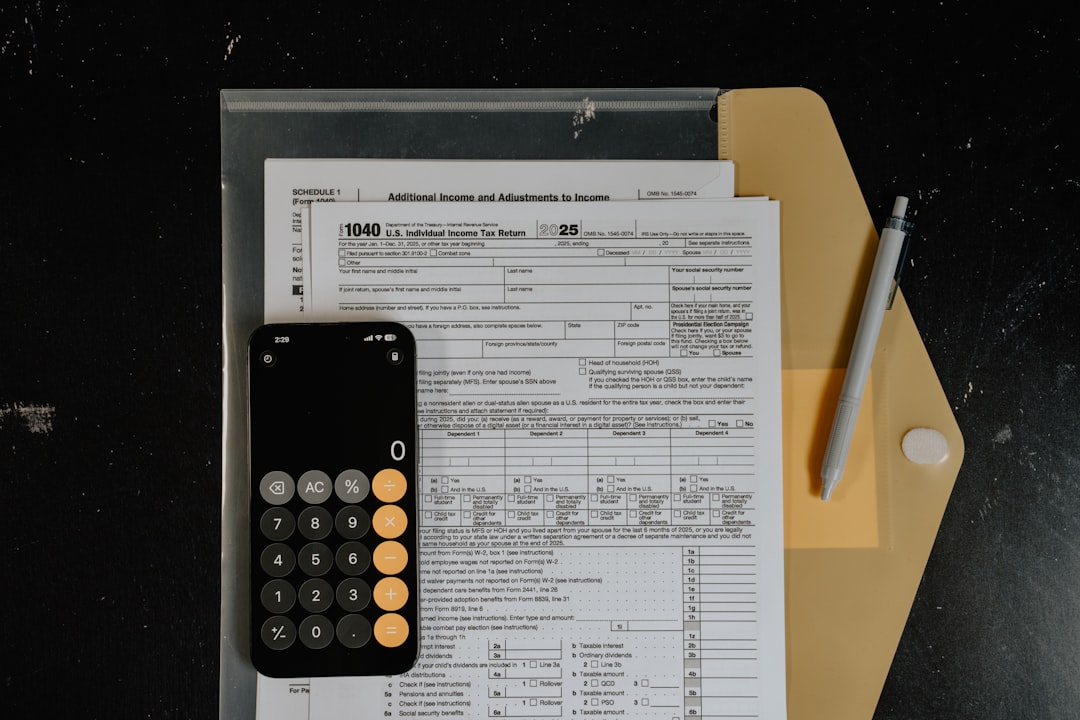
HMRC does not proactively contact most employees when a code looks wrong. The burden of identifying errors has quietly shifted onto individual workers, most of whom have neither the time nor the inclination to audit their own tax position. That is exactly the situation that allows small errors to compound into significant overpayments.
You started this article asking why your tax code is different this year. The honest answer is: HMRC recalculated it based on information that may or may not reflect your actual circumstances, and it sent the update to your employer without necessarily explaining it to you. Whether the new code is right or wrong, you deserve to know why it changed.
Take two minutes now and check your tax code at /check-my-tax-code. If it is right, you will have peace of mind. If it is wrong, you will have the information you need to reclaim what is yours.
File your MTD quarterly updates in minutes
TapTax imports your bank statements, categorises expenses automatically, and submits to HMRC with a tap. Free plan, no card required.
Start freeFrequently asked questions
Why is my tax code different at the start of the new tax year?
HMRC recalculates tax codes ahead of each new tax year starting 6 April, using data from your employer, DWP, and its own records. Changes to your salary, benefits in kind, outstanding underpayments, or state benefits can all trigger a revised code. Your employer receives the update automatically via payroll software, which is why you often see a new code on your April payslip with no accompanying explanation.
My tax code number went down this year. How much more tax am I paying?
Each point your code drops by represents £10 less in tax-free income per year. If your code dropped from 1257L to 1157L, your tax-free allowance fell by £1,000. At the basic rate of 20%, that means you are paying an extra £200 in tax this year. At the higher rate of 40%, the same drop costs £400.
Can HMRC collect last year's underpayment through this year's tax code?
Yes. HMRC can reduce your personal allowance in the current year's code to collect underpayments of up to £3,000 from the previous tax year. You should have received a P800 tax calculation letter explaining the underpayment. If you disagree with the amount or believe it was caused by an HMRC error, you can contact HMRC to dispute it before the collection begins.
How do I find out exactly why my tax code changed this year?
Log into your HMRC Personal Tax Account at gov.uk/personal-tax-account and look for your coding notice (P2). This document lists every component HMRC used to calculate your code, including benefits, deductions, and any underpayment adjustments. Alternatively, call HMRC on 0300 200 3300 and ask for a breakdown of your current coding.
Is it possible my tax code is wrong even though it is the same number as last year?
Yes. If your circumstances changed, such as stopping a benefit, changing jobs, or starting to receive the State Pension, and HMRC was not informed, your code may appear unchanged but be incorrect. An unchanged code can also mean you are silently overpaying due to fiscal drag, as the personal allowance has been frozen while wages have risen. It is worth reviewing your position regardless.