
On this page9 sections
Your salary just went up. Good news. Then your payslip arrives and your tax code has changed. Suddenly the pay rise feels smaller than it should, and nobody at work can explain why.
This is one of the most common and least-explained moments in UK employment tax. Your tax code changed after your salary increase, and HMRC did it quietly, automatically, and possibly incorrectly. Understanding what just happened, and acting on it, could put real money back in your pocket.
Why Does a Pay Rise Change Your Tax Code at All?
Most employees assume their tax code is a fixed thing, like a National Insurance number. It is not. HMRC reviews and adjusts tax codes throughout the year using a system called Real Time Information (RTI), which receives payroll data from your employer every time you are paid.
When your employer reports a salary increase through RTI, HMRC's systems recalculate your projected annual income. If that projection crosses certain thresholds, your tax code changes, sometimes immediately, sometimes a few weeks later.
The three salary thresholds that most commonly trigger a tax code change are:
- £100,000: Your personal allowance begins to taper. For every £2 you earn above £100,000, you lose £1 of your £12,570 personal allowance. Earn £125,140 or more, and your personal allowance disappears entirely. If you have crossed into this post, you may find the detail in Income Over £100,000: Why Your Tax Code Shrinks useful alongside this one.
- £50,270: You cross from basic rate (20%) into higher rate (40%) tax. HMRC may adjust your code to collect the higher rate more accurately.
- £50,000: The High Income Child Benefit Charge kicks in if you or your partner claims Child Benefit. HMRC may reduce your tax code to collect this charge through PAYE rather than waiting for a Self Assessment return.
None of these triggers is obscure. But HMRC's automated systems often apply them bluntly, using estimated annual income based on a single month's payroll data, without accounting for bonuses, irregular pay, or mid-year changes.
- Tax Code
- A combination of numbers and letters on your payslip that tells your employer how much Income Tax to deduct from your wages each pay period. The most common code, 1257L, means you receive the full £12,570 personal allowance. A lower number means a smaller allowance and more tax deducted.
The Mechanics: What the Letters and Numbers Actually Change

When HMRC sends a revised tax code to your employer, it typically arrives via the PAYE system with no fanfare. Your employer is legally required to apply it from the next pay run. You may not receive any direct notification.
Here is what the most common changes look like in practice:
1257L Becomes 1100L (or Lower)
This is the change that catches most people off guard. If HMRC decides you have untaxed income elsewhere, a benefit in kind, unpaid tax from a previous year, or a reduction in your personal allowance, it reduces the number in your code. A code of 1100L means HMRC is treating you as if you only have £11,000 of tax-free allowance, not £12,570. You pay tax on an extra £1,570, which at 20% is £314 per year, or roughly £26 per month.
For a higher-rate taxpayer, the same adjustment costs £628 per year. These are not trivial amounts.
A Suffix Changes from L to T or M or K
Letters matter. L means you get the standard personal allowance. T means HMRC wants to review your code (often triggered by complex circumstances). M and N relate to the Marriage Allowance transfer. K is particularly alarming: it means your deductions actually exceed your personal allowance, and your employer must deduct additional tax to compensate.
If you have just received a pay rise into the £100,000 to £125,140 band and your code has changed to something like 500T or lower, HMRC is tapering your personal allowance in real time. Every percentage point of that taper represents money leaving your payslip.
BR or D0 or D1 Appears on a Second Job or Pension
If you have two income sources and your salary increase tips your total income into higher-rate territory, HMRC may reassign a flat rate code to your secondary income. BR means all income from that source is taxed at 20%, D0 at 40%, D1 at 45%, with no personal allowance applied at all. These are broad-brush codes that frequently over-collect, particularly when income fluctuates.
£300+
average annual overpayment when a salary increase triggers the wrong tax code
1 in 3
tax codes contain an error according to HMRC's own estimates
£12,570
personal allowance for 2024/25, which HMRC can reduce automatically without telling you directly
The Specific Scenario HMRC Gets Wrong Most Often
Imagine you are a marketing manager who receives a promotion in September. Your salary moves from £48,500 to £54,000. Your employer submits the new payroll data. HMRC's RTI system sees a higher-rate taxpayer and, because it annualises your September payslip, briefly calculates your projected annual income as significantly higher than £54,000.
HMRC then issues a new tax code that collects additional tax, sometimes to claw back what it believes was under-collected earlier in the year. Your October payslip is noticeably lighter than you expected.
The problem is that HMRC's calculation may have been based on an annualised projection that included a one-off back-payment from your employer to make up the salary difference since your last review. That lump sum inflated your apparent income for the year. Your November payslip returns to normal, but the higher-collecting tax code may remain in place for months unless you challenge it.
This is not an edge case. It is the standard outcome of how RTI annualisation works. And it affects tens of thousands of employees every year.
When a Salary Increase Brings the Child Benefit Trap
If you or your partner claims Child Benefit and your salary has just crossed £50,000, your tax code changed after your salary increase for a specific and particularly frustrating reason: the High Income Child Benefit Charge.
HMRC may adjust your tax code to collect this charge through PAYE, reducing your personal allowance to account for the benefit that must be repaid. The charge is 1% of the Child Benefit received for every £100 of income between £50,000 and £60,000 (adjusted thresholds apply from April 2024 under revised HMRC rules; always verify the current figures).
The code change can arrive before you have even spoken to anyone about Child Benefit, because HMRC cross-references Child Benefit records with RTI data automatically. If the adjustment is wrong, perhaps because your partner claims Child Benefit and their income is also changing, the code can significantly over-collect. For more detail on this specific trigger, see High Income Child Benefit Charge: Is Your Tax Code Wrong?.
What to Do Within 30 Days of Noticing the Change
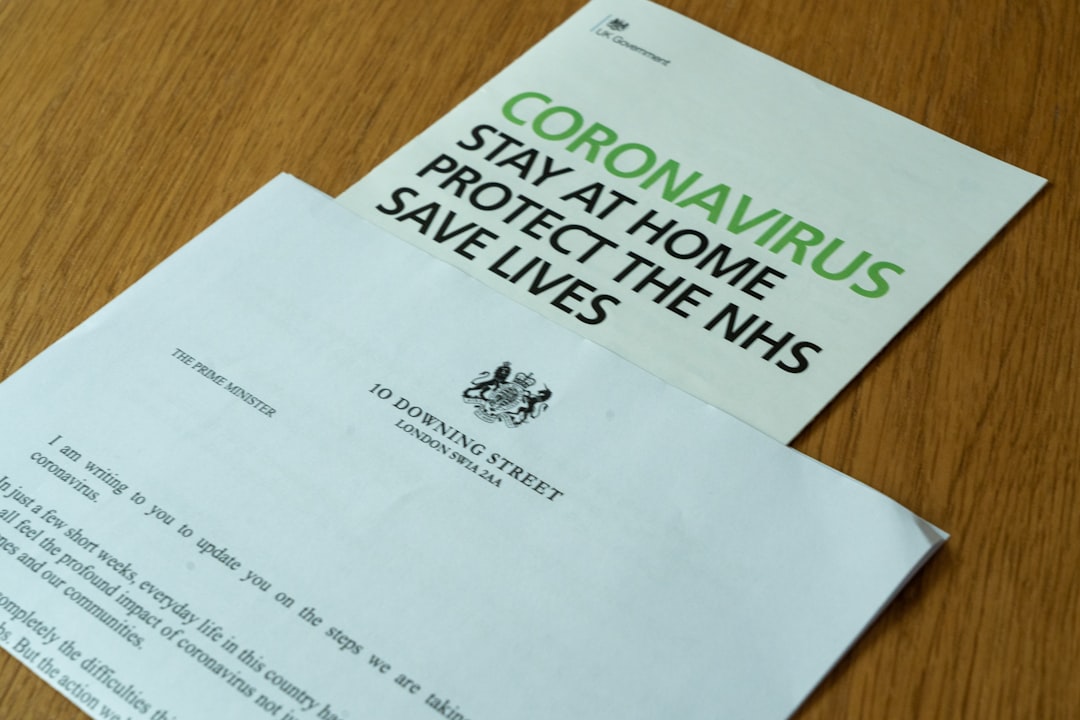
The most important thing to understand is that HMRC's automated code change is not final. It is an instruction, not a ruling. You have the right to challenge it, and doing so promptly limits how much over-collected tax you need to reclaim.
Step One: Check Your Tax Code Now
Do not wait for HMRC to write to you. Most tax code notices are sent to your Personal Tax Account online, but many employees never log in to check. Check your tax code for free at /check-my-tax-code to see exactly what code is applied to your employment and what adjustments HMRC has built into it.
Look for anything that reduces your standard 1257L code: an underpayment amount carried forward, a benefit in kind estimate, or a personal allowance restriction. All of these reduce the number and increase your deductions.
Step Two: Understand What Triggered the Change
Your Personal Tax Account should show a breakdown of how your code was calculated. If it lists an underpayment from a previous year, check whether that underpayment is real. If it lists a benefit in kind (such as a company car or private medical insurance) check whether the value HMRC has used matches what your employer reported.
Errors at this point are common. Your employer may have submitted an outdated P11D figure, or HMRC may have carried forward an estimated benefit that no longer exists.
Step Three: Contact HMRC or Update via Personal Tax Account
If you identify an error, you can update HMRC directly through your Personal Tax Account, or by calling HMRC's income tax helpline on 0300 200 3300. Be specific: quote the incorrect figure, explain what the correct figure should be, and ask for a revised tax code to be issued to your employer.
HMRC is required to act on corrections promptly, and any over-collected tax from the current tax year will be refunded through your payslip once the corrected code is applied. Tax overpaid in a previous year requires a formal P800 reclaim or a Self Assessment return.
For a structured approach to identifying code errors, Verify Tax Code Accuracy UK: A Forensic Checklist walks through each line of a tax code calculation methodically.
People also ask
Why did my tax code go down after a pay rise?
HMRC's Real Time Information system detects your higher salary and may reduce your tax code to collect additional tax, particularly if your income crosses the £50,270 higher-rate threshold or £100,000 personal allowance taper. It may also be collecting an estimated underpayment from earlier in the year.
How long does it take for a tax code to update after a salary increase?
HMRC typically updates your tax code within two to six weeks of your employer reporting the salary change through RTI payroll. In some cases it happens within days. The new code takes effect from your next pay run after your employer receives the updated instruction.
Can I dispute a tax code change after getting a promotion?
Yes. Tax codes are not final assessments. You can challenge an incorrect code through your Personal Tax Account online or by calling HMRC on 0300 200 3300. If the code was wrong and you overpaid tax, HMRC must refund the difference, either through an adjusted payslip or a P800 tax calculation.
What is the difference between a BR and a 1257L tax code?
1257L means you receive the full £12,570 personal allowance against that source of income. BR means all income from that source is taxed at a flat 20% basic rate with no personal allowance. BR is usually applied to a second job or pension, but if applied incorrectly to your main employment it will significantly over-collect tax.
How Much Could You Be Overpaying?
The answer depends on your income and the nature of the code change, but the figures are rarely trivial.
A basic-rate taxpayer whose code is reduced by 100 (say from 1257L to 1157L) overpays £200 per year. A higher-rate taxpayer with the same reduction overpays £400. An employee whose salary has crossed £100,000 and whose personal allowance has been incorrectly tapered by more than the rules require can easily overpay £1,000 or more across a tax year.
The particularly bitter irony is that these overpayments sit with HMRC, earning nothing, until either HMRC notices and issues a P800 refund or the employee proactively reclaims. HMRC does not pay interest on over-collected PAYE tax in most cases. The money is yours; you just have to ask for it back.
You can use TapTax's tax overpayment tools at /check-my-tax-code to estimate how much a changed code is costing you each month and whether a reclaim is worth pursuing.
For a broader view of how much HMRC may already be holding of yours, Tax Code Overpayment Calculator: How Much Is HMRC Keeping? gives a structured calculation framework.
The Bigger Problem: HMRC Assumes, Rather Than Asks
There is a structural issue here that is worth naming plainly. HMRC's RTI system is designed for employer reporting, not employee communication. When your salary changes, your employer tells HMRC. HMRC acts on that information and tells your employer what to deduct. You, the employee, are the last to know and the least consulted.
Tax code notices are sent to your Personal Tax Account, but there is no push notification, no text message, no automatic email unless you have specifically set up alerts. The default assumption is that employees will log into a government portal to monitor their own tax coding. Most do not.
This design means that incorrect tax codes after a salary increase persist for months, sometimes for entire tax years, with the employee assuming their payslip is correct because it has a payroll team and HMRC behind it. Both of those parties are simply following instructions; neither is checking whether the original instruction was accurate.
The fix is not complicated. Check your tax code. Do it today. A pay rise should feel like a pay rise, not a tax surprise.
A Final Word on Timing

If your salary increase happened in the second half of the tax year (October onwards), HMRC's system will annualise it and potentially assume you have earned at the higher rate for the full year. This can produce an emergency over-collection in your November or December payslip that is particularly jarring in the run-up to Christmas.
Do not assume this will self-correct in April. It may result in a refund via a P800, but that takes time and is not guaranteed to be accurate. The faster route is to verify your tax code now at /check-my-tax-code and raise any discrepancy with HMRC before the tax year ends.
Your salary increased because you earned it. The tax code should reflect your actual circumstances, not HMRC's automated estimate of them.
File your MTD quarterly updates in minutes
TapTax imports your bank statements, categorises expenses automatically, and submits to HMRC with a tap. Free plan, no card required.
Start freeFrequently asked questions
Will my tax code automatically correct itself after a salary increase?
Not always. HMRC may issue a corrected code later in the tax year or send a P800 after the tax year ends, but this is not guaranteed and can take months. If you believe your code is wrong, it is faster and more reliable to contact HMRC directly or update your details through your Personal Tax Account rather than waiting for automatic correction.
My salary increase was mid-year. Why is my tax code collecting extra tax?
HMRC annualises your pay when it receives updated payroll data, which means it projects your new monthly salary across the full tax year. If this projection suggests you have underpaid tax in the earlier months, HMRC adjusts your code to collect the difference across the remaining pay periods. The collection is spread out, but it reduces your take-home pay noticeably.
How do I know if my new tax code after a salary increase is correct?
Log into your HMRC Personal Tax Account at gov.uk or use a tax code checking tool. Look at the breakdown of your code: it should show your personal allowance, any benefits in kind, and any underpayments being collected. If any figure looks unfamiliar or inflated, that is the likely source of over-collection. You have the right to question and correct any figure HMRC has used.
Can a salary increase cause me to lose my personal allowance entirely?
Yes, if your salary crosses £100,000. For every £2 earned above £100,000, you lose £1 of your £12,570 personal allowance. Once your income reaches £125,140, the personal allowance disappears completely. This effectively creates a 60% marginal tax rate on income between £100,000 and £125,140, which HMRC collects by reducing your tax code number significantly.
What should I do if my employer is using the wrong tax code after a pay rise?
Your employer is legally required to use the tax code HMRC has issued, so the fix must go through HMRC rather than your payroll department. Contact HMRC on 0300 200 3300 or update your details via your Personal Tax Account. Once HMRC issues a revised code, your employer must apply it from the next available pay run.