
On this page8 sections
CIS already tells HMRC what you earned. Making Tax Digital is about to ask you to tell them again, every quarter, or face penalties. For sole traders working under the Construction Industry Scheme, that is not just bureaucratic redundancy; it is a potential double-counting nightmare that could leave you overpaying tax if you are not careful.
The CIS System Already Watches You. MTD Watches You Again.
If you work as a sole trader subcontractor in construction, your contractor is legally required to verify you with HMRC and deduct tax at source before paying you. That deduction, typically 20% for registered subcontractors or 30% for the unregistered, gets reported to HMRC every month by your contractor via the CIS monthly return. In theory, HMRC already knows your gross earnings from every contractor you work for.
So when HMRC designed Making Tax Digital for Income Tax Self Assessment (MTD ITSA), you might have expected some kind of carve-out for CIS workers. A recognition that the data is already flowing. You would be disappointed.
Under MTD ITSA, sole traders with qualifying income above £50,000 must submit four cumulative quarterly updates per tax year, plus a Final Declaration after the tax year ends, starting April 2026. There is no exemption for CIS subcontractors. The quarterly updates require you to report your income and expenses digitally, through HMRC-approved software, regardless of what your contractors have already submitted on your behalf.
- Construction Industry Scheme (CIS)
- A HMRC scheme requiring contractors to deduct tax at source from payments to subcontractors in the construction industry. Deductions are typically 20% for registered subcontractors and 30% for unregistered ones. These deductions are credited against the subcontractor's Self Assessment tax liability, not treated as a final tax payment.
Why This Creates a Real Problem for Construction Workers

Here is a concrete scenario. Jake is a self-employed groundworker based in the East Midlands, turning over £68,000 a year working for two main contractors. Both contractors deduct CIS at 20%, meaning Jake receives 80p in every pound he earns. Over the tax year, roughly £13,600 is withheld and sent to HMRC on his behalf.
When Jake files his Self Assessment, he declares his gross income, deducts his legitimate business expenses (fuel, tools, PPE, plant hire costs), and arrives at his taxable profit. His actual Income Tax and National Insurance bill comes to around £11,200. Because his CIS deductions of £13,600 exceed his liability, he gets a refund of £2,400.
Now add MTD to that picture. From April 2026, Jake must log every invoice, every payment received, and every expense in compliant software and submit four quarterly updates. If he misattributes income, forgets to record a cash payment from a smaller contractor, or mixes up materials recharges as trading income rather than a passthrough cost, his quarterly figures will be wrong. HMRC's quarterly data and the contractor's CIS returns will not match. That mismatch does not trigger an automatic correction; it triggers a compliance flag.
And here is where it gets expensive. If Jake underreports income in a quarterly update, even accidentally, that can constitute an inaccuracy that attracts a penalty under the Taxes Management Act. The fact that his contractor correctly reported the same income via CIS provides zero automatic protection.
1.3m
registered CIS subcontractors in the UK, many of whom are sole traders
20%
standard CIS deduction rate for registered sole trader subcontractors
£50k
income threshold triggering mandatory MTD ITSA from April 2026
The Materials Recharge Problem HMRC Does Not Mention
One of the most common reporting errors for CIS sole traders has nothing to do with MTD specifically, but MTD will make it more consequential because you are now reporting quarterly rather than annually.
When a subcontractor supplies both labour and materials, CIS rules allow the contractor to deduct tax only on the labour element, not the materials. But in practice, many sole traders invoice a blended day rate or project rate, and the split between labour and materials is muddy. HMRC's CIS guidance states that if a contractor cannot identify the materials element from the invoice, they must deduct tax on the entire amount.
Under annual Self Assessment, you had twelve months to reconcile this. Under MTD, you are reconciling every quarter. If your Quarter 1 update lumps materials income and labour income together and treats it all as trading income, you may be overstating your taxable profit for that period. You cannot then quietly correct it at year end without using the formal correction process for quarterly updates, which itself carries a risk of triggering further HMRC scrutiny.
The practical fix is straightforward but requires discipline: every invoice you raise should clearly itemise the labour element and the materials element separately. Your MTD software should have separate income categories for each. This is not just good practice; from April 2026, it becomes the foundation of your compliance.
What MTD-Compliant Software Needs to Handle for CIS Workers
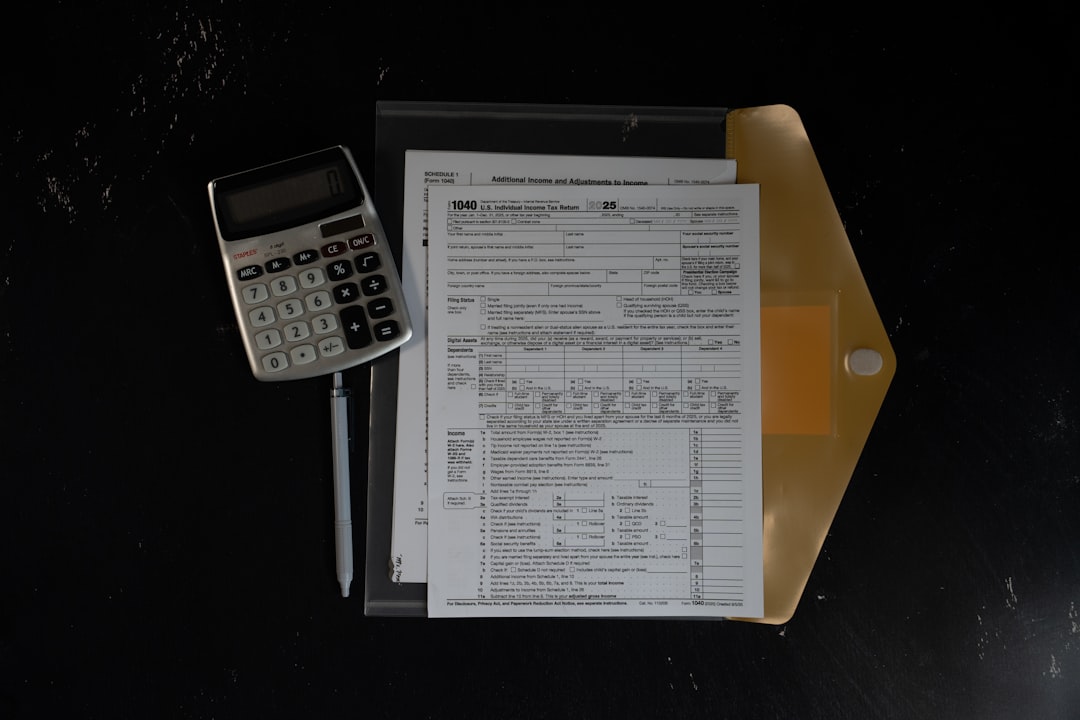
Not all MTD-approved software treats CIS correctly. Some products designed primarily for retail or professional services businesses do not have a dedicated CIS income category, forcing users to squeeze their construction income into generic "trading income" fields. That creates two problems.
First, it makes the Final Declaration harder to reconcile against the CIS deductions you are claiming as tax credits. Second, it increases the chance of a mismatch with HMRC's own records from contractor CIS returns.
When evaluating any MTD software as a construction worker, ask specifically whether it can:
Record gross CIS income and track deductions separately
Your software should let you record what you were paid (net) and what was deducted (CIS tax withheld), so that your gross income figure in your quarterly update matches what your contractors reported. If the software only records money in your bank account, it is recording net income and your submissions will systematically understate your gross turnover.
Handle mixed labour and materials invoices
You need to be able to split a single invoice into a labour component (taxable, subject to CIS) and a materials component (not subject to CIS deduction, but still part of your trading income net of cost). Software that only has one income field cannot do this cleanly.
Import bank transactions and match them to invoices
CIS payments arrive net of deduction, which means your bank statement will never match your invoice total. Software that auto-reconciles based on bank feeds alone will create persistent discrepancies unless it is specifically designed to handle the gross-up calculation.
For a broader look at whether automated tools actually deliver on their promises, Automatic Receipt Scanning Tax UK: Does It Actually Work? is worth reading before you commit to any platform.
The Gross Payment Status Question
Some established CIS subcontractors hold Gross Payment Status (GPS), meaning their contractors pay them in full with no deduction. To qualify, HMRC requires you to meet turnover tests (at least £30,000 for a sole trader), compliance tests (no late returns, no unpaid tax), and a business use test.
For GPS holders, MTD is arguably more straightforward because there is no CIS deduction to reconcile. Your quarterly income submissions will match your bank receipts. But GPS holders are disproportionately likely to earn over £50,000, which means they are in the first wave of MTD ITSA mandation from April 2026. Many GPS holders also subcontract to others, which means they have both incoming trading income and outgoing CIS deductions to manage as contractors themselves.
If you are a GPS holder who also uses subcontractors, your MTD obligations extend to the contractor side of the equation. You will need to ensure your digital records capture your CIS-deductible payments to subbies as an allowable expense, not just your own income.
CIS Refunds and Cash Flow Under MTD
For subcontractors who routinely receive CIS tax refunds (like Jake in the earlier example), one underappreciated MTD benefit is potential earlier visibility of your refund position. Under the current annual system, you might not receive your refund until six months after the tax year ends. HMRC has indicated that MTD's year-end Final Declaration process could eventually support more responsive refund processing, though this has not been formalised into a specific commitment.
For now, the practical reality is that MTD will require more frequent record-keeping without delivering faster refunds. You are doing more administrative work for the same outcome, which is a fair criticism. The MTD late payment penalty system adds a further layer of risk: miss a quarterly submission and you accumulate penalty points, even if you ultimately owe no tax whatsoever because your CIS deductions exceed your liability.
People also ask
Do CIS subcontractors have to use MTD from April 2026?
Yes, if your gross trading income exceeds £50,000. CIS deductions do not exempt you from MTD ITSA. You must still submit four quarterly updates per year using HMRC-approved software, regardless of what your contractors report via CIS monthly returns.
How do I record CIS deductions in MTD software?
You should record your gross income (before the CIS deduction) as your trading income, and record the CIS tax withheld as a separate line item to be claimed as a tax credit on your Final Declaration. Avoid recording only the net amount you actually receive, as this will understate your turnover.
Can I claim CIS tax deductions back through MTD?
CIS deductions are credited against your Self Assessment tax liability, not refunded automatically through MTD quarterly updates. You claim them on your Final Declaration under MTD, which replaces the annual Self Assessment return. If deductions exceed your liability, HMRC issues a refund after your return is processed.
What happens if my MTD income figures don't match my contractor's CIS returns?
HMRC can cross-reference your quarterly MTD submissions against CIS monthly returns filed by your contractors. A persistent mismatch may trigger a compliance check. Always record gross income, not net received, to align with what contractors report.
Getting Ready Before April 2026

If you are a CIS sole trader earning over £50,000, you have until April 2026 before MTD ITSA is mandatory. That sounds comfortable until you realise that testing and bedding in new software while running a business takes longer than anyone admits.
The steps worth taking now:
Confirm your gross income figure. Add up what your contractors paid you plus CIS deductions withheld. That gross figure is your qualifying income for the MTD threshold test, not the net amount hitting your bank account.
Start categorising your invoices. Labour versus materials, gross versus net. Build the habit now so that when software mandates it from April 2026, you are not starting from scratch.
Check your CIS registration. If HMRC has you down as unregistered (30% deduction rate) when you should be on 20%, your quarterly figures will be inflated on the deductions side. Fix this via the CIS helpline (0300 200 3210) before MTD adds complexity.
Choose software that understands CIS. Ask vendors directly how they handle CIS gross income versus net receipts. If the answer is vague, keep looking.
For a broader walkthrough of the MTD preparation process, How to Get Started With MTD ITSA Before April 2026 covers the registration steps in detail. And if you are also working alongside other trades on site, the parallel experience of joiners and carpenters navigating MTD in MTD for Joiners and Carpenters: What HMRC Ignores covers similar ground from a slightly different angle.
CIS already tells HMRC what you earned. From April 2026, MTD will require you to tell them too. The scheme that was supposed to simplify tax compliance for construction workers has handed them a quarterly reporting obligation on top of an existing monthly one. The only way to avoid being caught in the middle is to make sure both stories tell exactly the same number.
File your MTD quarterly updates in minutes
TapTax imports your bank statements, categorises expenses automatically, and submits to HMRC with a tap. Free plan, no card required.
Start freeFrequently asked questions
Does MTD ITSA apply to CIS subcontractors earning exactly £50,000?
The £50,000 threshold for the first wave of MTD ITSA (April 2026) is based on gross qualifying income, not net income after CIS deductions. If your gross turnover before CIS tax is withheld reaches £50,000, you are in scope. Those earning between £30,000 and £50,000 come under MTD from April 2027.
How does Gross Payment Status affect my MTD obligations as a CIS worker?
GPS holders are paid in full with no CIS deduction, making income reconciliation simpler under MTD. However, GPS holders must still submit quarterly updates if their income exceeds the threshold. GPS holders who also engage their own subcontractors must track outgoing CIS payments as a business expense in their digital records.
Will MTD software automatically claim my CIS deductions against my tax bill?
No. MTD quarterly updates report income and expenses but do not automatically process CIS tax credits. You declare CIS deductions withheld on your Final Declaration, and they are credited against your tax liability in the usual way. Faster refund processing under MTD has been discussed by HMRC but has not been formally implemented.
What CIS expenses can I deduct through MTD to reduce my taxable profit?
As a CIS sole trader, allowable expenses include tools, plant hire, PPE, fuel and vehicle costs, subcontractor payments you make to others, materials (net of any markup), insurance, and relevant training. These must be recorded digitally in HMRC-approved software and reported in each quarterly update.
If my contractor files CIS returns late, does that affect my MTD submissions?
Your MTD obligation runs independently of your contractor's CIS filing. You must still submit quarterly updates on time based on your own records. However, if there is a mismatch between your submissions and a late-filed CIS return, HMRC may raise a compliance query. Keep your own invoices and payment records to evidence your figures independently of your contractors.